Calcium Without Dairy: Complete Guide to Plant Sources
Discover how to meet your calcium needs without dairy. Evidence-based guidance on plant sources, fortified foods, absorption factors, and UK recommendations.

By Reece Douglas · Founder, FreshPlate
Listen to this article
Calcium Without Dairy: Complete Guide to Plant Sources
Whether you're managing lactose intolerance, following a vegan diet, or simply prefer to limit dairy, getting adequate calcium is entirely achievable through other food sources. Calcium is essential for bone health, muscle function, nerve signalling, and blood clotting—yet many people assume dairy is the only practical source.
The truth is that numerous plant-based and fortified foods provide excellent calcium, and with a basic understanding of absorption factors, you can confidently meet your needs without a single glass of milk. This guide covers evidence-based strategies for obtaining calcium without dairy, tailored to UK dietary recommendations and real-world meal planning.
Why Calcium Matters and How Much You Need
Calcium is the most abundant mineral in the human body, with 99% stored in bones and teeth. The remaining 1% circulates in blood and soft tissues, where it plays critical roles in muscle contraction, enzyme function, and cellular signalling. When dietary intake falls short, your body withdraws calcium from bone reserves, potentially compromising bone density over time.
The UK Reference Nutrient Intake (RNI) for calcium varies by life stage, reflecting changing physiological needs throughout the lifespan.
- Adults (19-64 years) — 700mg per day for both men and women
- Adolescents (11-18 years) — 800mg for girls, 1000mg for boys during peak bone-building years
- Older adults (65+ years) — 700mg daily, though absorption efficiency decreases with age
- Pregnancy and breastfeeding — No increase required if usual intake meets 700mg; foetal needs are met through enhanced maternal absorption
- Children (7-10 years) — 550mg daily to support growing bones
Signs You May Not Be Getting Enough Calcium
Calcium deficiency develops gradually and often goes unnoticed until bone density tests reveal problems. Long-term inadequate intake increases osteoporosis risk, particularly in post-menopausal women and older adults. Short-term severe deficiency—though rare—can cause muscle cramps, numbness in extremities, and abnormal heart rhythms.
Plant-Based Calcium Sources Without Dairy
Numerous plant foods provide substantial calcium, though portion sizes and preparation methods influence how much your body actually absorbs. The key is incorporating a variety of these foods daily rather than relying on a single source.
Leafy Green Vegetables
Dark leafy greens are calcium powerhouses, though oxalate content varies significantly between varieties, affecting bioavailability. Low-oxalate greens offer the best absorption.
- Kale (curly or cavolo nero) — 150mg per 100g cooked, with excellent bioavailability around 50%
- Spring greens — 75mg per 80g cooked portion, highly absorbable
- Pak choi (bok choy) — 105mg per 100g cooked, very low in oxalates
- Broccoli — 40mg per 80g portion, with good absorption rates
- Watercress — 170mg per 100g raw, though rarely eaten in large quantities
Soya Products and Tofu
Soya-based foods offer concentrated calcium, particularly when set with calcium salts. Always check labels, as processing methods vary.
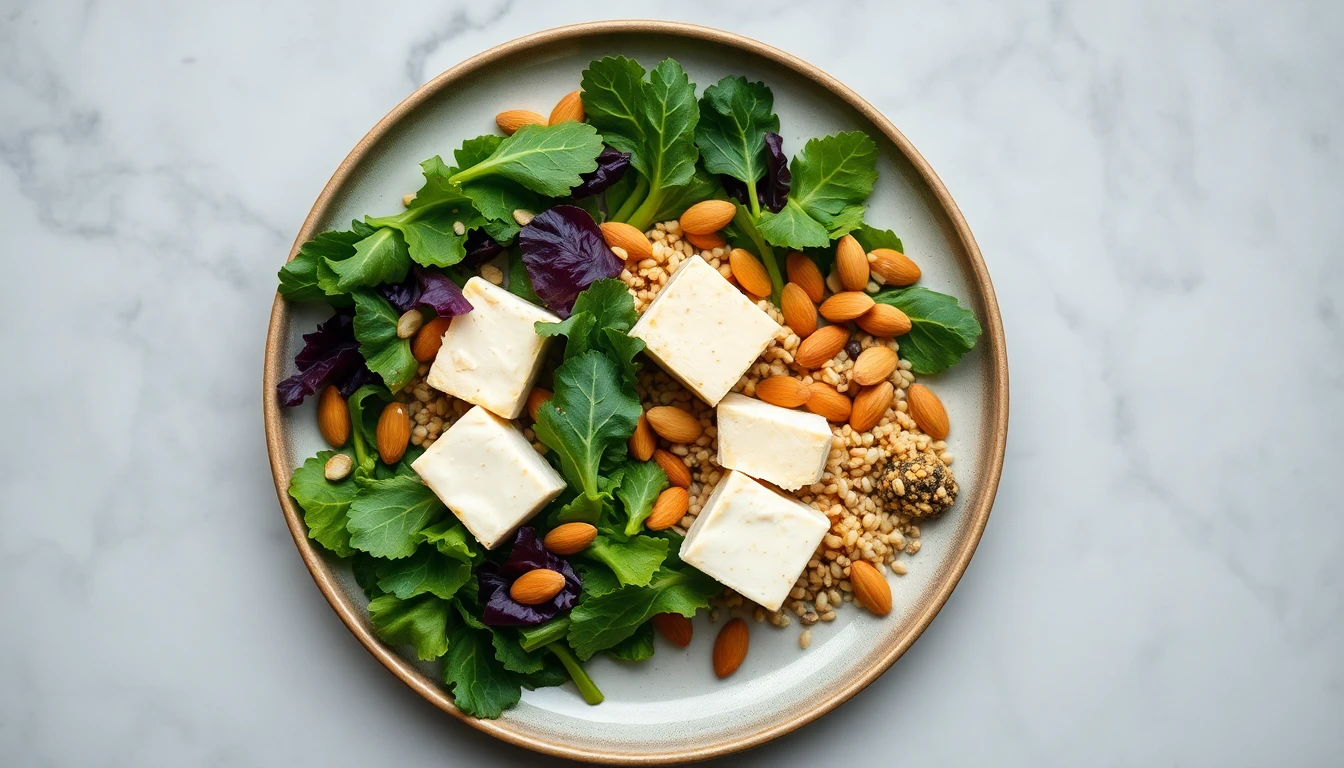
- Calcium-set tofu — 350-400mg per 100g (check packaging for calcium sulphate or chloride)
- Fortified soya milk — 120mg per 100ml, matching dairy milk when fortified
- Tempeh — 111mg per 100g, plus beneficial probiotics
- Edamame beans — 63mg per 100g cooked
Seeds and Nuts
Small but mighty, seeds pack impressive calcium alongside healthy fats and protein. Grinding or soaking can improve mineral availability.
- Sesame seeds — 975mg per 100g (1 tablespoon of tahini provides roughly 65mg)
- Chia seeds — 631mg per 100g, excellent in porridge or smoothies
- Almonds — 264mg per 100g; 23 almonds provide approximately 75mg
- Brazil nuts — 160mg per 100g, though limit to 3-4 daily due to selenium content
- Flaxseeds — 255mg per 100g when ground
Pulses and Legumes
Beans and lentils contribute modest calcium alongside fibre, iron, and protein. Soaking before cooking reduces phytate content, improving mineral absorption.
- White beans (haricot, cannellini) — 90mg per 100g cooked
- Chickpeas — 49mg per 100g cooked; tahini-based hummus boosts this significantly
- Red kidney beans — 50mg per 100g cooked
- Black-eyed beans — 42mg per 100g cooked
Fortified Foods: Reliable Calcium Without Dairy
Fortified foods provide highly bioavailable calcium in forms similar to supplements, making them particularly valuable for those avoiding dairy. UK regulations ensure fortified products meet specific standards, though exact amounts vary by brand.
- Fortified plant milks — Aim for 120mg per 100ml (oat, almond, soya, coconut varieties widely available); shake well as calcium settles
- Fortified breakfast cereals — Can provide 200-300mg per serving; check labels for added sugar
- Fortified plant-based yoghurts — Comparable to dairy versions at roughly 120-140mg per 100g
- Fortified orange juice — Some brands provide 120mg per 100ml, though watch sugar content
- White and brown bread — UK law requires white and brown flour fortification with calcium carbonate; two slices provide approximately 85mg
- Fortified tofu — As mentioned above, but worth emphasising the calcium-set varieties
Reading Labels Effectively
When choosing fortified products, check both the calcium content per serving and the type of calcium used. Calcium carbonate and tricalcium phosphate are highly bioavailable. Be mindful that some plant milks settle during storage—shaking thoroughly before use ensures you get the full fortified amount rather than leaving minerals at the bottom of the carton.
Maximising Calcium Absorption: What Helps and What Hinders
Simply consuming calcium-rich foods isn't enough—your body must be able to absorb and utilise the mineral effectively. Several dietary and lifestyle factors significantly influence calcium bioavailability.
Factors That Enhance Absorption
Vitamin D is the most critical cofactor for calcium absorption, enabling intestinal cells to transport the mineral into the bloodstream. Without adequate vitamin D, absorption can drop below 15%, compared to 30-40% with sufficient levels.
- Vitamin D — Aim for 10 micrograms daily from October to March in the UK; consider year-round supplementation if indoors frequently or have darker skin
- Adequate protein — Supports bone matrix formation, though excessive intake can increase urinary calcium loss
- Vitamin K — Found in leafy greens, supports bone mineralisation by activating proteins that bind calcium
- Moderate portions — Calcium absorption is most efficient with 500mg or less per meal; spread intake throughout the day
- Fermented foods — The fermentation process in foods like tempeh, miso, and sauerkraut can reduce phytates
Factors That Reduce Absorption
Several naturally occurring compounds and dietary patterns can interfere with calcium uptake. Understanding these helps you time meals strategically rather than avoiding nutritious foods entirely.
- High oxalates — Found in spinach, beetroot, rhubarb, and Swiss chard; these bind calcium in the gut, reducing absorption to around 5%
- Phytates — Present in whole grains, nuts, seeds, and legumes; soaking, sprouting, or fermenting reduces content
- Excessive salt — High sodium intake increases calcium excretion through urine; aim to stay below 6g salt daily
- Caffeine — Modest effect; one cup of coffee causes loss of approximately 2-3mg calcium, easily offset by adding fortified milk
- Very high fibre intake — Speeds gut transit time, potentially reducing mineral absorption if exceeding 35-40g daily without adequate hydration
- Excessive alcohol — Impairs vitamin D metabolism and directly damages bone-forming cells
The Oxalate Question: Should You Avoid Spinach?
Spinach contains substantial calcium on paper—around 99mg per 100g cooked—but its high oxalate content means only 5% is absorbed. This doesn't make spinach unhealthy; it's rich in iron, folate, and antioxidants. Simply don't rely on it as a primary calcium source. Choose low-oxalate greens like kale, pak choi, and broccoli when calcium is your priority, and enjoy spinach for its other nutritional benefits.
Practical Meal Planning for Calcium Without Dairy
Meeting 700mg daily is straightforward when you understand serving sizes and combine complementary foods. Here's how a day might look without any dairy products.
- Breakfast — Porridge made with 200ml fortified oat milk (240mg) topped with 1 tablespoon ground almonds (20mg) and a tablespoon of chia seeds (64mg)
- Mid-morning snack — Two figs and 10 almonds (approximately 85mg combined)
- Lunch — Hummus and tahini wrap with 80g pak choi and red pepper, served with an orange (approximately 150mg)
- Afternoon — Fortified soya yoghurt, 125g pot (150mg)
- Dinner — Stir-fried tofu (100g calcium-set, 350mg) with broccoli (40mg), served with brown rice
- Total — Approximately 1,099mg, comfortably exceeding requirements
Simple Swaps to Boost Daily Intake
Small adjustments to familiar meals can significantly increase calcium without dramatic dietary overhauls.
- Swap regular plant milk for fortified versions — adds 120mg per glass
- Choose calcium-set tofu over other proteins — doubles or triples calcium per serving
- Sprinkle tahini or ground sesame over salads, soups, and grain bowls — each tablespoon adds 65mg
- Use kale or spring greens instead of spinach or lettuce — improves both calcium content and absorption
- Add white beans to soups, stews, and salads — 90mg per 100g alongside protein and fibre
Special Considerations and When to Seek Advice
Certain health conditions, medications, and life stages affect calcium requirements and metabolism. If any of these apply, discuss your calcium strategy with a healthcare professional.
- Osteoporosis or family history — May require higher intake (1000-1200mg) and regular bone density monitoring
- Coeliac disease or inflammatory bowel conditions — Malabsorption issues may necessitate supplementation and fortified foods
- Chronic kidney disease — Calcium and phosphate balance requires careful medical management
- Thyroid or parathyroid disorders — These glands regulate calcium metabolism; medication interactions possible
- Corticosteroid use — Long-term steroids increase bone loss; enhanced calcium and vitamin D intake often recommended
- Post-menopausal women — Oestrogen decline accelerates bone loss; some guidelines suggest 1000mg daily
Should You Take Calcium Supplements?
Food sources are generally preferable to supplements because they provide additional nutrients that support bone health and reduce the risk of excessive intake. However, supplements may be appropriate if dietary intake consistently falls short despite food-based strategies, particularly for older adults, those with absorption issues, or during pregnancy if dietary sources prove insufficient.
If supplementing, calcium citrate is better absorbed than calcium carbonate, especially if you have low stomach acid or take proton pump inhibitors. Split doses across the day—your body absorbs smaller amounts more efficiently. Always discuss supplementation with a GP or registered dietitian, as excessive calcium (above 1500mg daily) may increase cardiovascular risk in some populations.
How FreshPlate Can Support Your Calcium Choices
Keeping an eye on calcium by hand can feel tedious, particularly when you're juggling several dietary needs or health conditions. FreshPlate takes some of the legwork out: you tell it about your allergens, your diet, any cultural or religious food preferences and your medicines, and the recipes it builds are made around all of that.
Whether you're dairy-free by choice or necessity, you can log what you eat by photo, barcode or search, and a pack that no database knows is read off its own label, with the ingredients checked against your allergens and food rules. For a dish you make yourself, such as a tofu bake or a loaf, Cook works out the numbers from your ingredient lines and keeps the food in your kitchen, so you can log a portion in one tap next time. The Progress tab has a minerals-and-vitamins panel measured against targets set for your body, and a "How we worked this out" tap behind every number shows which guidance it comes from, such as the NHS, WHO or UK RNI.
Each recipe also has a For you tab that shows what was actually checked for you, why the recipe suits your goal and conditions, and whether it fits what is left of your day. If you take medicines, the tab lists them, and where the checker has quoted food advice on file, it opens those words word for word with a link to the checker page. Where there is none yet, it says so and points you to your pharmacist. You can also try the free food–medication checker on the website at /website/tools/food-medication-checker/.
Frequently asked questions
Can you get enough calcium on a vegan diet?
+
Yes, absolutely. A well-planned vegan diet can easily meet the UK recommended 700mg daily through fortified plant milks, calcium-set tofu, leafy greens, seeds, pulses, and fortified foods. Ensuring adequate vitamin D and choosing low-oxalate vegetables optimises absorption.
Which vegetables are highest in absorbable calcium?
+
Kale, pak choi, spring greens, and broccoli offer the best combination of calcium content and bioavailability. Unlike high-oxalate greens like spinach, these vegetables allow your body to absorb 40-60% of their calcium content.
How much calcium is in fortified plant milk compared to dairy?
+
Most fortified plant milks in the UK contain 120mg calcium per 100ml, matching the calcium content of cow's milk. Always shake the carton well before pouring, as calcium can settle at the bottom during storage.
Does coffee really deplete your calcium?
+
Coffee has a modest effect—one cup causes the loss of approximately 2-3mg of calcium through urine. This is easily offset by adequate dietary intake and can be compensated by adding a splash of fortified plant milk to your coffee.
Should I avoid spinach if I need more calcium?
+
No need to avoid spinach entirely, but don't count on it as a calcium source. Its high oxalate content binds calcium in the gut, making only about 5% absorbable. Enjoy spinach for its iron, folate, and antioxidants, but choose kale or pak choi when calcium is your priority.
Sources
Did this answer your question?
Reece reads every reply. Questions we have not covered become new guides.
Make calcium one less thing to worry about.
Get our free calcium guide by email — the best food sources, what helps and hinders absorption, and a week of meal ideas. One genuinely useful email a week — no spam, unsubscribe anytime.
Free forever. You'll also be first in line for the FreshPlate app — with a free trial at launch.