Glycemic Index vs Load: What Matters for Blood Sugar?
Understand the key differences between glycemic index and glycemic load, and learn which metric matters most for managing blood sugar and weight effectively.

By Reece Douglas · Founder, FreshPlate
Listen to this article
Glycemic Index vs Load: What Matters for Blood Sugar?
If you're managing diabetes, watching your weight, or simply trying to maintain steady energy levels throughout the day, you've likely encountered terms like glycemic index and glycemic load. These two metrics often appear together in nutrition discussions, yet they measure quite different things. Understanding the distinction between them can transform how you choose foods and manage your blood sugar.
The confusion is understandable. Both concepts relate to how carbohydrates affect your blood glucose, but whilst glycemic index looks at food quality, glycemic load considers quantity as well. This seemingly small difference has significant practical implications for meal planning and blood sugar control. Let's explore what each measure actually tells us and, more importantly, which one you should pay attention to when making food choices.
What Is Glycemic Index?
The glycemic index (GI) is a numerical scale that ranks carbohydrate-containing foods based on how quickly they raise blood glucose levels compared to pure glucose. Developed in the early 1980s by Dr David Jenkins at the University of Toronto, the GI scale runs from 0 to 100, with pure glucose assigned a value of 100 as the reference point.
To determine a food's GI, researchers give healthy volunteers a portion containing 50 grams of digestible carbohydrate from the test food, then measure blood glucose responses over two hours. The resulting blood sugar curve is compared to the response from consuming 50 grams of pure glucose. Foods are then categorised into three groups:
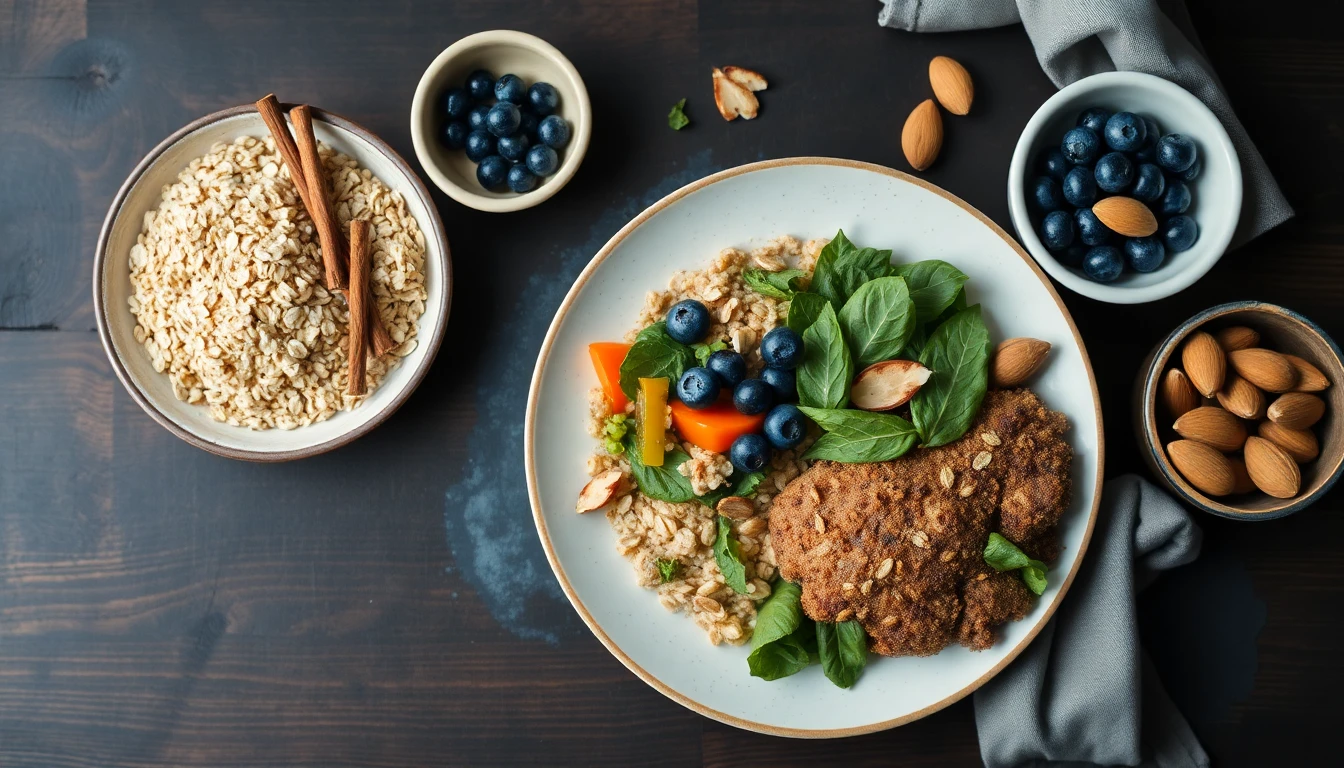
- Low GI (55 or less) — Foods that cause a gradual rise in blood sugar, such as steel-cut oats, lentils, and most non-starchy vegetables
- Medium GI (56-69) — Foods with moderate impact on blood glucose, including wholemeal bread, brown rice, and sweet potatoes
- High GI (70 or above) — Foods that trigger rapid blood sugar spikes, like white bread, cornflakes, and instant mashed potatoes
Why GI Alone Can Be Misleading
The glycemic index has one significant limitation: it doesn't account for portion sizes. A food receives its GI rating based on a standard 50-gram portion of available carbohydrate, which can mean vastly different serving sizes for different foods.
Watermelon provides a perfect example of this limitation. It has a high GI of around 72, suggesting it would spike your blood sugar dramatically. However, watermelon is mostly water. To consume 50 grams of carbohydrate from watermelon, you'd need to eat roughly 700 grams—nearly three cups. In reality, a typical serving is far smaller and contains only about 11 grams of carbohydrate.
Understanding Glycemic Load
Glycemic load (GL) was developed by Harvard researchers to address the practical limitations of GI. Rather than looking at a food in isolation, GL factors in both the quality of carbohydrates (via GI) and the quantity you actually eat. This makes it a more useful tool for real-world meal planning.
The formula for calculating glycemic load is straightforward: GL = (GI × grams of carbohydrate per serving) ÷ 100. Like GI, foods are classified into three categories based on their GL per serving:
- Low GL (10 or less) — Minimal impact on blood sugar; includes most non-starchy vegetables, nuts, and small portions of whole grains
- Medium GL (11-19) — Moderate blood sugar impact; typical of reasonable portions of whole grains, starchy vegetables, and some fruits
- High GL (20 or above) — Significant blood sugar impact; often large portions of refined carbohydrates or concentrated sugars
How GL Changes the Picture
Returning to our watermelon example, whilst the GI is 72 (high), a typical 120-gram serving contains only 11 grams of carbohydrate. The glycemic load calculation looks like this: (72 × 11) ÷ 100 = 7.9. That's a low GL, meaning watermelon has minimal impact on blood sugar when eaten in normal portions.
Conversely, some foods with moderate GI values can have high GL when typical portions are large. Basmati rice has a medium GI of around 58, but a 150-gram cooked serving contains about 45 grams of carbohydrate, giving it a GL of 26—well into the high category. This explains why portion control matters, even with lower-GI carbohydrates.
Glycemic Index vs Glycemic Load: Which Should You Use?
For most people managing blood sugar or weight, glycemic load provides more practical guidance than glycemic index alone. GL reflects how your body actually responds to the portions you're likely to eat, rather than an arbitrary 50-gram carbohydrate standard.
That said, both metrics have their place. GI is useful when comparing similar foods in similar portions—for instance, choosing between white rice (GI 73) and brown rice (GI 68). GL becomes essential when portion sizes vary significantly or when planning entire meals.
When GI Is Most Useful
The glycemic index works well as a quick comparison tool when you're choosing between similar foods that you'll eat in comparable amounts. It's particularly helpful for staple carbohydrates that form the base of meals.
- Bread choices — Comparing white bread (GI 75) with seeded wholegrain bread (GI 53) when making a sandwich
- Breakfast cereals — Selecting between cornflakes (GI 81) and porridge oats (GI 55) for your morning meal
- Pasta types — Choosing wholemeal pasta (GI 37) over regular white pasta (GI 49) for dinner
- Rice varieties — Opting for basmati rice (GI 58) instead of jasmine rice (GI 89) as a side dish
When GL Provides Better Guidance
Glycemic load becomes the superior metric when planning complete meals, managing portion sizes, or comparing foods with dramatically different carbohydrate densities.
- Fruit portions — Understanding that high-GI watermelon (GL 4 per serving) impacts blood sugar less than lower-GI dates (GL 42 per serving)
- Mixed meals — Calculating the total glycemic impact of a plate containing multiple carbohydrate sources
- Portion planning — Determining appropriate serving sizes for blood sugar control, particularly important for diabetes management
- Snack selection — Comparing the real-world impact of different snack options like carrots (GL 3) versus pretzels (GL 16)
Practical Applications for Blood Sugar Control
Whether you're managing type 1 diabetes, type 2 diabetes, prediabetes, or simply aiming for stable energy levels, understanding how to apply GI and GL concepts can significantly improve your blood sugar control.
Building Low-GL Meals
Creating meals with a low overall glycemic load doesn't mean eliminating carbohydrates entirely. Instead, focus on combining lower-GI carbohydrates with appropriate portions, plus protein, healthy fats, and fibre to further moderate blood sugar responses.
- Start with non-starchy vegetables — These contribute volume and nutrients with minimal GL impact; fill half your plate with vegetables like broccoli, spinach, peppers, or courgettes
- Choose whole grains in controlled portions — A 75-gram cooked serving of quinoa (GL 13) or bulgur wheat (GL 12) provides satisfaction without excessive blood sugar impact
- Include lean protein — Protein doesn't affect GI or GL directly, but it slows carbohydrate absorption and promotes satiety; aim for palm-sized portions of fish, poultry, legumes, or tofu
- Add healthy fats — A tablespoon of olive oil, a quarter of an avocado, or a small handful of nuts further moderates the glycemic response whilst adding flavour and nutrients
Timing and Combination Strategies
How you combine and time your carbohydrate intake matters as much as which carbohydrates you choose. Several evidence-based strategies can help optimise blood sugar control.
- The vinegar effect — Consuming a tablespoon of vinegar with meals can reduce post-meal blood sugar spikes by 20-30%, according to research published in the European Journal of Clinical Nutrition
- Protein timing — Eating protein before carbohydrates in a meal may improve blood sugar responses; consider starting meals with a salad with chicken or fish
- Resistant starch — Cooking then cooling starchy foods like potatoes, rice, and pasta increases resistant starch content, effectively lowering their glycemic impact when reheated
- Fibre pairing — Combining higher-GI foods with high-fibre options slows glucose absorption; pair fruit with nuts or whole grain toast with nut butter
Weight Management and Metabolic Health
Beyond immediate blood sugar control, choosing lower-GL foods supports long-term weight management and metabolic health. Research suggests that diets emphasising low-GL carbohydrates may offer several benefits.
A systematic review in the British Medical Journal found that low-GL diets were associated with better weight loss outcomes and improved markers of cardiovascular health compared to high-GL eating patterns. The mechanisms appear to involve improved insulin sensitivity, reduced hunger hormones, and more stable energy levels that support consistent healthy eating.
- Enhanced satiety — Low-GL meals tend to keep you fuller longer, reducing the likelihood of snacking between meals and supporting calorie control without constant hunger
- Stable energy — Avoiding blood sugar spikes and crashes means more consistent energy throughout the day, reducing fatigue and cravings for quick-energy foods
- Improved insulin sensitivity — Over time, consistently lower glycemic loads may help improve how your cells respond to insulin, reducing diabetes risk
- Reduced inflammation — Lower-GL diets are associated with reduced markers of systemic inflammation, which is linked to numerous chronic diseases
How FreshPlate Fits Around Glycemic Load
Whilst understanding glycemic index and glycemic load is valuable, working out these values by hand for every meal can be overwhelming. FreshPlate doesn't calculate GI or GL for you, but it takes care of other parts of the work, so you can spend your energy on the choices that matter.
If you're managing diabetes or prediabetes, FreshPlate steers rather than prescribes: recipes lean towards what public UK guidance (NHS, BDA) says suits the condition, and the app never claims to treat, prevent or cure anything. Medicines are added by brand or generic name from the NHS's own medicines list, and every recipe is built around your medication list. The For you tab on each recipe lists your medicines. For those with food advice on file, it opens the wording from the NHS or US FDA label, quoted word for word. For the rest, it says there is no advice on file yet and points you to your pharmacist. You can also try the free food–medication interaction checker on the website at /website/tools/food-medication-checker/.
The app helps you see what's on your plate, too. You can log meals by photo, barcode or search, and a pack no database knows is read off its own label on your phone, with the nutrition table filling in the numbers. If you cook your own loaf, tray bake or pot of something, Cook on the Meals tab measures it from its ingredient lines, keeps it in your kitchen and logs a slice or portion in one tap. Each recipe's For you tab shows what was checked for you, gives a line on why it suits your goal and conditions, and says whether it fits what is left of your day. That leaves you free to enjoy satisfying, delicious meals, with your own GI and GL knowledge guiding your choices.
Frequently asked questions
Is glycemic load more important than glycemic index?
+
For practical meal planning, glycemic load is generally more useful than glycemic index alone because it accounts for both the quality and quantity of carbohydrates you actually eat. GL reflects real-world portion sizes whilst GI is based on a standard 50-gram carbohydrate portion that may not match typical servings.
What is a good glycemic load for a meal?
+
Aim for meals with a total glycemic load under 20 for blood sugar control. A low-GL meal (10 or less) is ideal for managing diabetes or weight, whilst medium-GL meals (11-19) are reasonable for most healthy individuals. High-GL meals (20 or above) should be occasional rather than regular.
Can you eat high GI foods if the glycemic load is low?
+
Yes, in appropriate portions. Foods like watermelon or carrots have high GI values but contain relatively little carbohydrate per serving, resulting in low glycemic loads. This is why GL provides more practical guidance—it shows that small portions of higher-GI foods can fit into a blood-sugar-friendly eating pattern.
Does glycemic load matter if you don't have diabetes?
+
Yes. Even without diabetes, choosing lower-GL foods supports stable energy levels, better appetite control, and long-term metabolic health. Research links high-GL diets to increased risks of obesity, heart disease, and type 2 diabetes, making GL relevant for anyone interested in preventive health.
How can I lower the glycemic load of my favourite foods?
+
Reduce portion sizes, combine carbohydrates with protein and healthy fats, add vinegar or lemon juice to meals, include plenty of non-starchy vegetables, and choose whole grain versions when available. Cooking and cooling starchy foods before eating also increases resistant starch, effectively lowering their GL.
Sources
- Glycemic Index Foundation — About Glycemic Index
- Harvard T.H. Chan School of Public Health — Carbohydrates and Blood Sugar
- Diabetes UK — Glycaemic Index and Diabetes
- British Medical Journal — Relation between changes in intakes of dietary fiber and grain products and changes in weight and development of obesity
Did this answer your question?
Reece reads every reply. Questions we have not covered become new guides.
Make blood sugar one less thing to worry about.
Get our free blood sugar guide by email — the best food sources, what helps and hinders absorption, and a week of meal ideas. One genuinely useful email a week — no spam, unsubscribe anytime.
Free forever. You'll also be first in line for the FreshPlate app — with a free trial at launch.