Collagen Foods: Natural Sources for Skin & Joint Health
Discover the best collagen-rich foods, how vitamin C boosts synthesis, and whether food sources beat supplements for skin, joints, and overall health.

By Reece Douglas · Founder, FreshPlate
Listen to this article
Collagen Foods: Natural Sources for Skin & Joint Health
Collagen has become something of a buzzword in wellness circles, with supplements promising everything from wrinkle-free skin to pain-free joints. But before collagen became a trendy powder, humans were getting it the old-fashioned way: through food. Your body manufactures collagen naturally from the protein you eat, and certain foods provide either ready-made collagen or the specific building blocks your body needs to produce its own.
Understanding which foods support collagen production—and how they compare to supplements—can help you make informed choices about your diet. Whether you're concerned about joint health, skin elasticity, or simply want to optimise your protein intake, knowing the science behind collagen-rich foods puts you in control of your nutritional strategy.
What Is Collagen and Why Does It Matter?
Collagen is the most abundant protein in your body, making up roughly 30% of your total protein content. It's the main structural component of connective tissues throughout your body—in your skin, bones, tendons, ligaments, and cartilage. Think of it as the scaffolding that holds your body together.
Your body produces collagen naturally by combining amino acids—the building blocks of protein—that you obtain from food. This process requires several nutrients, particularly vitamin C, zinc, and copper. As we age, collagen production naturally declines, which contributes to visible signs like wrinkles, as well as less obvious changes like reduced joint flexibility and bone density.
There are at least 16 types of collagen in the human body, but types I, II, and III account for about 80-90% of it. Type I is found in skin, tendons, and bones; type II mainly in cartilage; and type III in skin, blood vessels, and internal organs. When we talk about collagen foods, we're primarily discussing sources that provide the amino acids needed to produce these types.
Animal-Based Collagen Foods
Animal products are the only direct dietary sources of collagen, as plants don't contain this protein. When you consume collagen from animal sources, your digestive system breaks it down into amino acids and smaller peptides, which your body then uses as raw materials to build its own collagen and other proteins.
Bone Broth
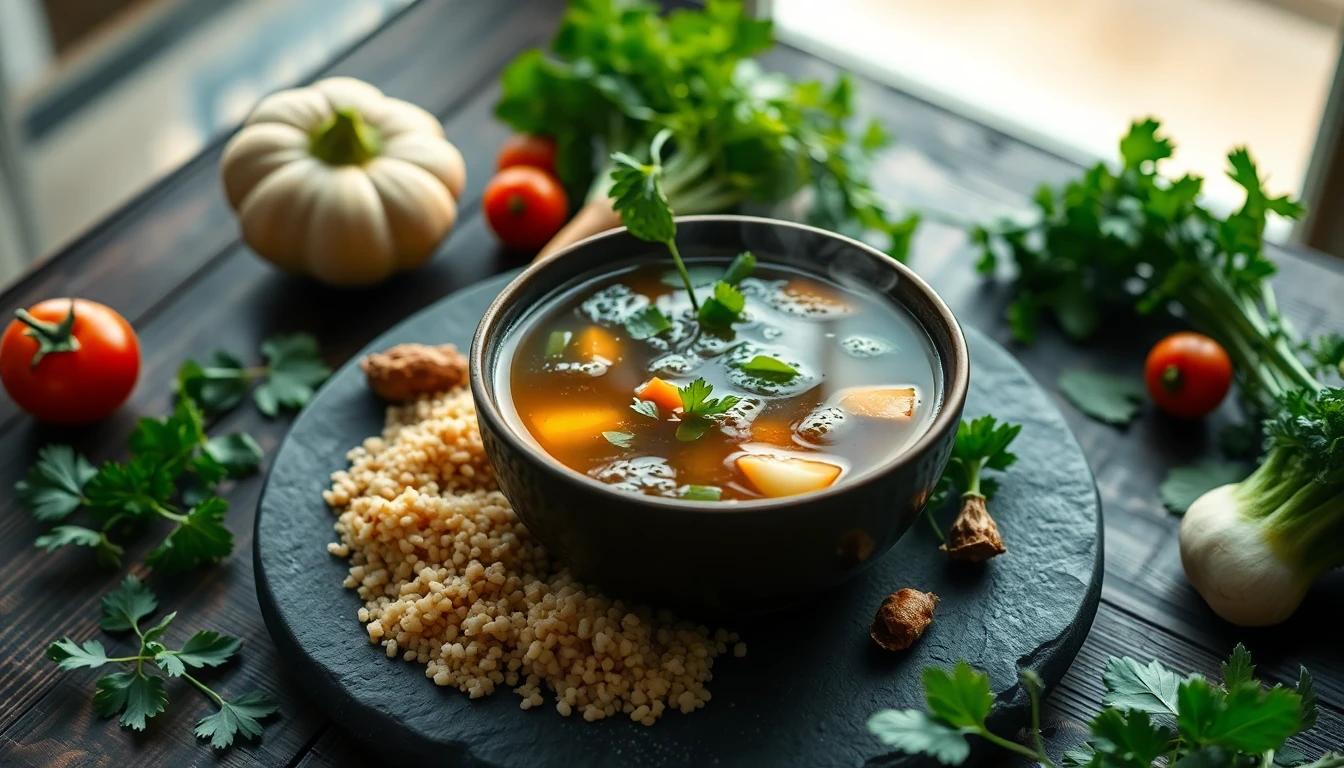
Bone broth has become synonymous with collagen-rich eating, and for good reason. Made by simmering animal bones and connective tissue for extended periods—often 12 to 24 hours—bone broth extracts collagen, minerals, and amino acids from the bones into the liquid.
The long cooking time breaks down collagen into gelatin, which is why properly made bone broth forms a gel when cooled. This gelatin contains the same amino acids as collagen, particularly glycine, proline, and hydroxyproline. Whilst research on bone broth specifically is limited, these amino acids are well-established as collagen building blocks.
- Beef bone broth — rich in type I and III collagen from marrow bones, knuckles, and feet
- Chicken bone broth — contains type II collagen, particularly beneficial for joint health when made with feet and necks
- Fish bone broth — lower in fat, cooks more quickly (2-4 hours), and type I collagen is highly bioavailable
Fish and Shellfish
Fish provides collagen primarily in the skin, bones, and scales. Marine collagen has gained attention in research for its potentially superior bioavailability—meaning your body may absorb and use it more efficiently than collagen from land animals. Fish collagen is predominantly type I, which is the same type most abundant in human skin.
- Salmon — particularly the skin, which is often discarded but highly nutritious
- Sardines — eating whole sardines including the small bones provides collagen and calcium
- Mackerel — oily fish with edible skin rich in both collagen and omega-3 fatty acids
- Shellfish — prawns, crab, and lobster contain collagen in their shells and connective tissues
Poultry
Chicken and turkey are excellent sources of collagen, particularly in parts that many modern diets overlook. Chicken skin, cartilage, and the dark meat closer to bones all contain more collagen than lean breast meat.
- Chicken skin — high in type I and III collagen, though also higher in fat
- Chicken feet — used extensively in Asian cuisines, extraordinarily rich in collagen
- Chicken wings — the joints and cartilage provide both collagen and glucosamine
- Turkey neck — often used in stock-making, contains abundant connective tissue
Other Animal Sources
Tougher cuts of meat, organ meats, and parts requiring slow cooking methods generally contain more collagen than lean muscle cuts.
- Beef cuts — brisket, chuck roast, short ribs, and oxtail are all collagen-rich
- Pork skin — pork crackling or rind is almost pure collagen and fat
- Egg whites — whilst not containing collagen itself, egg whites are rich in proline and glycine
Vitamin C and Collagen Synthesis: The Critical Connection
Even if you consume adequate protein and collagen-containing foods, your body cannot effectively produce collagen without sufficient vitamin C. This vitamin acts as a co-factor in the enzymatic reactions that build collagen molecules. Without it, the collagen produced is unstable and cannot properly form the triple-helix structure that gives it strength.
This is why vitamin C deficiency causes scurvy, a disease characterised by the breakdown of connective tissue—bleeding gums, poor wound healing, and joint pain. Sailors on long voyages without fresh fruit or vegetables historically suffered from scurvy until the connection to vitamin C was discovered.
The NHS recommends adults get 40mg of vitamin C daily, though many nutrition experts suggest higher amounts for optimal collagen production. Fortunately, vitamin C is abundant in many everyday foods, and combining collagen-rich proteins with vitamin C sources at the same meal may optimise your body's ability to synthesise new collagen.
- Citrus fruits — oranges, lemons, grapefruit, and limes are classic sources providing 50-90mg per fruit
- Bell peppers — particularly red peppers, which contain more vitamin C than oranges (127mg per 100g)
- Strawberries — approximately 60mg per 100g serving
- Broccoli — around 90mg per 100g when raw, less when cooked
- Kiwi fruit — exceptionally high at 93mg per 100g
- Brussels sprouts — provide about 85mg per 100g cooked
- Tomatoes — modest but useful amount at 14mg per 100g
Plant-Based Collagen Alternatives: Supporting Your Body's Production
Here's an important truth: there is no such thing as vegan collagen from whole food sources. Collagen is an animal protein, full stop. However, plant-based eaters can absolutely support their body's natural collagen production by focusing on foods rich in the nutrients needed for collagen synthesis.
A well-planned vegan diet can provide all the amino acids, vitamins, and minerals your body needs to manufacture collagen. The key is consuming adequate protein from varied sources and ensuring sufficient intake of the co-factors required for collagen production, particularly vitamin C, zinc, copper, and manganese.
Protein Sources for Amino Acid Building Blocks
- Legumes — beans, lentils, and chickpeas provide lysine and proline
- Soya products — tofu, tempeh, and edamame offer complete protein with all essential amino acids
- Nuts and seeds — particularly pumpkin seeds (zinc) and cashews (copper)
- Quinoa — one of few plant proteins containing all nine essential amino acids
- Nutritional yeast — rich in B vitamins and provides additional protein
Key Micronutrients for Vegan Collagen Support
- Zinc — found in pumpkin seeds, hemp seeds, chickpeas, and fortified cereals; essential for collagen synthesis
- Copper — abundant in cashews, sesame seeds, and dark leafy greens; required for collagen cross-linking
- Manganese — present in whole grains, nuts, and leafy vegetables; aids in collagen formation
- Silicon — found in wholegrains, green beans, and bananas; may support collagen production
- Antioxidants — berries, dark chocolate, and green tea protect existing collagen from damage
Food Sources vs Supplements: What Does the Evidence Say?
The collagen supplement industry is worth billions, with products claiming benefits for skin, joints, hair, and nails. But how do these supplements compare to getting collagen-supporting nutrients from whole foods?
The scientific evidence on collagen supplements is mixed but growing. Some studies suggest hydrolysed collagen peptides may improve skin elasticity and hydration, whilst others show potential benefits for joint pain in osteoarthritis. However, many of these studies are small, industry-funded, or short-term. A 2021 review in the International Journal of Dermatology found that whilst oral collagen supplements showed promise for skin health, more rigorous, independent research is needed.
Whole foods offer advantages that isolated supplements cannot match. When you eat salmon skin with vegetables, you're getting not just collagen-building amino acids but also omega-3 fatty acids, vitamins, minerals, and other compounds that work synergistically. Bone broth provides not only collagen but also minerals like calcium and phosphorus extracted from the bones. The vitamin C in your vegetables is packaged alongside fibre, antioxidants, and phytonutrients.
That said, supplements may have a place for those who struggle to get adequate protein from food, have increased needs due to injury or surgery, or have difficulty digesting whole food sources. Quality matters enormously—look for products tested by third parties and from reputable manufacturers.
- Bioavailability — hydrolysed collagen supplements are broken down into smaller peptides that may be absorbed efficiently, but whole foods provide additional nutrients that support absorption
- Cost — whole food sources are generally more economical than high-quality collagen supplements
- Satiety — foods provide fullness and satisfaction that powders mixed into coffee do not
- Nutrient density — whole foods deliver packages of nutrients rather than isolated compounds
- Safety — food sources are generally safer with fewer concerns about contamination or purity
How FreshPlate Can Help You Plan Collagen-Supporting Meals
Building a diet that supports healthy collagen production requires more than just knowing which foods are rich in collagen or vitamin C. It means balancing these foods with your other nutritional needs, dietary preferences, medical conditions, and any medications you're taking.
FreshPlate can take some of the guesswork out of this. Every recipe the app generates is built around your own medication list, and for medical conditions it steers rather than prescribes, leaning towards what public UK guidance (NHS, BDA) says suits the condition. It never claims to treat, prevent or cure anything. Onboarding also asks about your cultural and religious food preferences, such as halal, kosher, Caribbean or South Asian, and your recipes respect them.
Whether you eat meat and fish and want to include more bone broth, or you're plant-based and want to plan your protein and micronutrients around collagen-supporting foods, each recipe has a For you tab. It shows what was actually checked for you (allergens, diet and religious rules), gives a line per target on why the recipe suits your goal and conditions, and tells you whether it fits what is left of your day. You can then log what you eat by photo, barcode or search, and the Progress tab shows a minerals-and-vitamins panel against targets set for your body, with a "How we worked this out" tap behind every number, so you can see how zinc and copper are coming along without doing the sums yourself. If you cook your own bone broth or stew, Cook can measure it from its ingredient lines in one go and let you log a portion in one tap from then on.
Instead of wondering whether your meals are covering the nutrients you're aiming for, you can see how the day is going and what to do next, leaving you free to simply cook and enjoy your food.
Frequently asked questions
Can you get enough collagen from food without taking supplements?
+
Yes, absolutely. Your body manufactures its own collagen from the amino acids in protein-rich foods, especially when combined with adequate vitamin C. Eating a varied diet with good protein sources and plenty of fruit and vegetables provides everything needed for healthy collagen production.
What is the best food source of collagen?
+
Bone broth, made by simmering animal bones for 12-24 hours, is one of the richest whole-food sources of collagen. Fish with skin, chicken with skin and cartilage, and tougher cuts of meat requiring slow cooking are also excellent sources.
How much vitamin C do you need for collagen production?
+
The NHS recommends 40mg daily for adults, though higher amounts may support optimal collagen synthesis. This is easily achieved through foods like one medium orange (70mg), 80g of strawberries (48mg), or half a red bell pepper (95mg).
Do vegans need to worry about collagen deficiency?
+
There's no such thing as dietary collagen deficiency because your body makes its own collagen. Vegans can support collagen production by eating varied protein sources, ensuring adequate vitamin C, zinc, and copper intake, and consuming foods rich in the amino acids glycine, proline, and lysine from legumes, soya, nuts, and seeds.
Does cooking destroy collagen in food?
+
Cooking actually makes collagen more digestible by breaking it down into gelatin. Long, slow cooking methods like braising, stewing, and making bone broth convert tough collagen into a form your digestive system can break down into amino acids more easily.
Sources
Did this answer your question?
Reece reads every reply. Questions we have not covered become new guides.
Make collagen one less thing to worry about.
Get our free collagen guide by email — the best food sources, what helps and hinders absorption, and a week of meal ideas. One genuinely useful email a week — no spam, unsubscribe anytime.
Free forever. You'll also be first in line for the FreshPlate app — with a free trial at launch.