Carb Counting for Insulin Users: A Beginner's Guide
Learn how to count carbs accurately for insulin dosing. Master portion estimation, understand glycaemic impact, and match your insulin to your meals confidently.

By Reece Douglas · Founder, FreshPlate
Listen to this article
Carb Counting for Insulin Users: A Beginner's Guide
If you've recently started insulin therapy, you've likely heard about carbohydrate counting. Perhaps your diabetes nurse mentioned it, or you've seen references to 'carb ratios' in your clinic paperwork. For many insulin users, carb counting transforms diabetes management from a restrictive routine into a flexible approach that fits around real life.
Carb counting for insulin is essentially a matching exercise: you calculate how many grams of carbohydrate you're about to eat, then dose your rapid-acting insulin accordingly. This method gives you freedom to adjust meal sizes, eat out confidently, and maintain stable blood glucose levels throughout the day. Whilst it takes practice, most people find the system becomes second nature within a few weeks. This guide will walk you through the fundamentals, from identifying carbs in everyday foods to understanding how different carbohydrate types affect your insulin needs.
What Is Carb Counting and Why It Matters for Insulin Users
Carbohydrate counting is a meal planning method where you track the grams of carbohydrate in foods and match your rapid-acting (bolus) insulin dose to that amount. Unlike older fixed-dose approaches where you ate the same amount at each meal, carb counting lets you adjust insulin to match varying portion sizes and food choices.
When you eat carbohydrates, your body breaks them down into glucose, which enters your bloodstream and raises blood sugar levels. People who produce insulin naturally release exactly the right amount to handle whatever they've eaten. When you inject insulin, you're replicating that process manually—and carb counting is the tool that helps you get the dose right.
The benefits extend beyond blood glucose control. Research published in Diabetes Care demonstrates that flexible insulin therapy using carb counting improves both HbA1c levels and quality of life scores compared to rigid meal plans. You can eat smaller or larger meals as your appetite dictates, enjoy social occasions without anxiety, and accommodate exercise or illness by adjusting doses accordingly.
The Role of Insulin-to-Carb Ratios
Your insulin-to-carb ratio (ICR) tells you how many grams of carbohydrate one unit of rapid-acting insulin will cover. For example, a ratio of 1:10 means one unit of insulin covers 10 grams of carbohydrate. If you're eating 50 grams of carbs, you'd need 5 units of insulin.
These ratios are highly individual and often vary throughout the day. Many people need more insulin per gram of carbohydrate at breakfast (perhaps 1:8) than at lunch or dinner (1:12). Your diabetes team will help you establish starting ratios based on your total daily insulin dose, weight, and blood glucose patterns, then you'll refine them through careful monitoring.
Identifying Carbohydrates in Common Foods
Foods that contain virtually no carbohydrate include meat, poultry, fish, eggs, oils, butter, and most nuts (though cashews and chestnuts are exceptions). Learning this distinction helps you focus your counting efforts where they matter.
- Starchy foods — bread, pasta, rice, potatoes, cereals, oats, and most baked goods. These are typically the largest carb contributors in meals
- Fruits — contain natural sugars and usually range from 10-25g carbs per portion. Berries are lower; bananas and grapes are higher
- Dairy products — milk, yoghurt, and soft cheeses contain lactose. Hard cheeses contain negligible carbs
- Sugary foods — sweets, biscuits, cakes, soft drinks, and added sugars are pure carbohydrate
- Legumes — beans, lentils, and chickpeas contain carbohydrate along with protein and fibre
- Vegetables — starchy veg like sweetcorn and parsnips contain meaningful carbs; non-starchy vegetables like broccoli, spinach, and peppers contain minimal amounts that rarely need dosing
Reading Nutrition Labels
UK nutrition labels list 'Carbohydrate' with 'of which sugars' underneath. For insulin dosing, you want the total carbohydrate figure per portion, not just the sugars. The 'of which sugars' line tells you how much is from simple sugars versus starches, which can inform your timing but doesn't change the total you're dosing for.
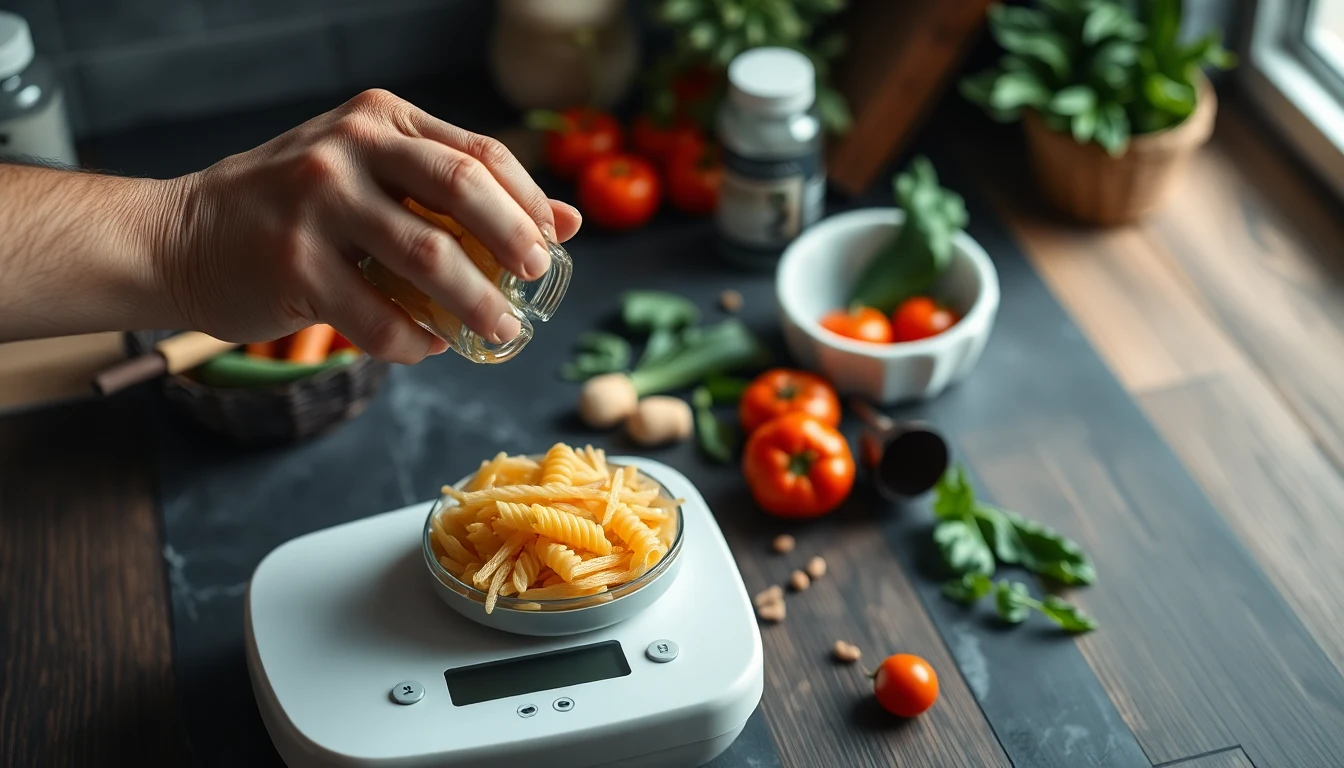
Check whether the values are per 100g or per serving. If you're eating 75g of pasta and the label shows 25g carbs per 100g, you'll be consuming roughly 19g carbohydrate. Many people find it helpful to use a kitchen scale initially until they develop an eye for portions.
The Fibre Question
In the UK, nutrition labels list total carbohydrate which already excludes fibre—it's shown separately. This differs from US labels where fibre is included in total carbs. For most UK insulin users, you can simply use the carbohydrate figure as shown.
However, in very high-fibre meals (over 5g fibre), some people find they need slightly less insulin than the carb count would suggest, as fibre slows digestion and glucose absorption. This is something to discuss with your diabetes team as you gain experience with your own patterns.
Mastering Portion Estimation for Accurate Carb Counting
Knowing that pasta contains approximately 25g carbs per 100g is only useful if you can estimate how much pasta is on your plate. Portion estimation is arguably the most practical skill in carb counting for insulin, and the one that improves most dramatically with practice.
- Use kitchen scales initially — weigh everything for the first few weeks. This trains your eye and corrects assumptions (most people dramatically underestimate pasta and rice portions)
- Learn visual reference points — a fist-sized potato is roughly 30g carbs; a slice of bread from a standard loaf is 15-20g; a medium apple is about 15g
- Measure cooking vs. cooked weights — dried pasta roughly doubles in weight when cooked. Rice nearly triples. Check whether your reference values are for cooked or dry weights
- Use measuring cups as bridges — a cup of cooked rice is approximately 45g carbs; a cup of milk is 12g. These tools are faster than scales once you're confident
- Photograph portions — take pictures of weighed meals with their carb counts. These become your personal reference library for eating out
Estimating Restaurant and Takeaway Portions
Eating out presents the biggest estimation challenge. Restaurant portions often far exceed home servings—a typical pasta dish might contain 100-120g carbohydrate, double what you'd serve yourself. Several strategies help:
Compare the portion to your palm, fist, or plate. A pasta serving that covers two-thirds of a large plate is likely 80-100g carbs. Rice portions can be judged by volume—if it would fill a mug, estimate around 60g carbs. For pizza, each slice from a standard 12-inch pizza contains roughly 30-35g carbohydrate.
Mobile apps like Carbs & Cals show photographed portions with carb values, which many people find invaluable when eating out. Over time, you'll develop reliable estimates for your regular haunts and favourite cuisines.
How Glycaemic Index Affects Insulin Dosing
The practical message: start by dosing for total carbs and injecting at your standard time (usually 10-15 minutes before eating). As you gain confidence, you can fine-tune timing based on the meal composition and your blood glucose patterns. Continuous glucose monitors make this learning process much easier by showing exactly when your glucose rises after different foods.
- Timing your insulin — rapid-acting insulin typically works best when injected 10-15 minutes before high-GI meals, allowing insulin action to match glucose absorption. With low-GI meals, injecting just before eating or even during the meal may prevent early hypos
- Split dosing — for very slow-digesting meals (think pizza with its fat and protein, or lentil curry), some insulin pump users split the dose: half upfront, half extended over 2-3 hours. This is complex and requires specialist advice
- Mixed meals moderate GI — fat, protein, and fibre all slow carbohydrate absorption. A jacket potato with tuna and salad has a lower effective GI than a plain potato, even though you're dosing for the same amount of carbohydrate
Fat and Protein Impact on Later Blood Glucose
Very high-fat or high-protein meals can cause delayed blood glucose rises hours after eating, even when you've correctly dosed for the carbohydrate content. A large steak meal or fish and chips might lead to glucose rising 3-5 hours later as protein converts to glucose through gluconeogenesis, and fat slows stomach emptying.
This isn't something beginners need to manage immediately, but as your carb counting becomes reliable and you start noticing patterns, you might need small additional doses for these meals. This is definitely an area to discuss with your diabetes team rather than adjusting independently.
Building Confidence: Your First Few Weeks of Carb Counting
Many diabetes centres run structured education programmes like DAFNE (Dose Adjustment For Normal Eating) which teach carb counting in a supportive group setting over several days. These courses significantly improve confidence and outcomes. If you haven't been offered such training, ask your diabetes team about availability in your area.
- Accept imperfection — even experienced carb counters don't achieve perfection. Blood glucose between 4-10 mmol/L two hours after eating is considered good control
- Test strategically — check blood glucose before eating and two hours afterwards to see how your dose matched the meal. This feedback loop accelerates learning
- Keep correction doses modest — if blood glucose is higher than expected after a meal, resist the urge to immediately inject large corrections. You may still have insulin active from your meal dose
- Watch for patterns — if you consistently run high after breakfast but not other meals, your breakfast insulin-to-carb ratio likely needs adjusting
- Ask for support — diabetes specialist nurses can review your records and help troubleshoot. This isn't something you need to master alone
How FreshPlate Can Support Your Carb Counting
Whilst carb counting becomes easier with practice, it still requires effort, particularly when you're cooking something new or eating a varied week of meals. FreshPlate takes some of the legwork out of keeping track of what you eat, though the counting and the decisions stay with you.
You can log meals by photo, barcode or search, and if a pack isn't in any database, the app reads it off its own label on your phone: the nutrition table fills in the numbers, so you're not typing them out by hand. Every food is stored per 100 g or ml with real measures, and a portion is only called a "serving" when the source declared one. If you cook your own loaf, tray bake or pot of something, Cook on the Meals tab measures it from your ingredient lines in one go, with a real serving size, and lets you log a slice or a portion in one tap from then on.
FreshPlate doesn't work out insulin doses, set insulin-to-carb ratios or suggest portions to match your medication, so keep following the advice from your diabetes team for that. What it can do is steer recipes towards what public UK guidance (NHS, BDA) says suits your condition, and show on each recipe's For you tab why it suits your goals and whether it fits what's left of your day. It also builds recipes around your own medication list, so the foods to watch with your medicines are there when you're planning. Do check anything about your insulin or other medicines with your diabetes team or pharmacist.
Frequently asked questions
How do I calculate my insulin dose from carb counting?
+
Divide the grams of carbohydrate in your meal by your insulin-to-carb ratio. For example, if you're eating 60g carbs and your ratio is 1:10, you need 6 units of insulin. Your diabetes team will help you establish your personal ratios, which often vary by time of day.
Do I need to count carbs in vegetables?
+
Non-starchy vegetables like broccoli, peppers, leafy greens, and courgettes contain so few carbs (typically under 5g per large portion) that most insulin users don't count them. Starchy vegetables like potatoes, sweetcorn, and parsnips do need counting as they contain significant carbohydrate.
What happens if I get my carb count wrong?
+
Small errors (5-10g) usually cause minor blood glucose variations that your body can handle. If you significantly underestimate carbs, your glucose will run higher than target; overestimating may cause mild hypoglycaemia. Check your glucose 2 hours after eating and adjust future estimates. With practice, accuracy improves substantially.
Should I count sugar alcohols in diabetic products?
+
Sugar alcohols (like sorbitol, xylitol) have minimal impact on blood glucose and are often subtracted from total carbs or counted at 50% value. However, UK nutrition labels typically list carbohydrates excluding these already. Check the specific product information or discuss with your diabetes team.
Can I eat unlimited protein and fat since they're not carbs?
+
Whilst protein and fat don't require immediate insulin dosing like carbohydrates, very large amounts can affect blood glucose hours later and contribute to weight gain. A balanced plate with appropriate portions of all macronutrients supports both diabetes management and overall health.
Sources
Did this answer your question?
Reece reads every reply. Questions we have not covered become new guides.
Eating around insulin shouldn’t be guesswork.
Get our free insulin food guide by email — the foods to watch, safe swaps, and meal ideas that work with your medication. One genuinely useful email a week — no spam, unsubscribe anytime.
Free forever. You'll also be first in line for the FreshPlate app — with a free trial at launch.