Vegan Complete Protein Combinations: UK Guide
Master vegan complete protein combinations with our UK guide. Learn which plant foods pair perfectly, amino acid profiles, and why timing matters less than you think.

By Reece Douglas · Founder, FreshPlate
Listen to this article
Vegan Complete Protein Combinations: UK Guide
One of the most persistent myths around vegan nutrition is that plant-based eaters must carefully combine specific foods at every meal to get 'complete' protein. This outdated advice has caused unnecessary stress for those following or considering a vegan diet. The truth is more flexible and forgiving than you might think.
Understanding vegan complete protein combinations does matter for optimal nutrition, but not in the rigid way many believe. This guide explains the science behind amino acids, which plant foods naturally contain complete proteins, and how to ensure you're meeting your protein needs on a vegan diet in the UK.
Understanding Complete Proteins and Amino Acids
Proteins are made up of building blocks called amino acids. Your body needs 20 different amino acids to function properly, nine of which are 'essential' because your body cannot manufacture them—you must obtain them from food.
A 'complete' protein contains all nine essential amino acids in sufficient quantities. Most animal products are complete proteins, whilst many plant foods are lower in one or more essential amino acids. However, this doesn't mean vegan diets are protein-deficient; it simply requires a slightly broader approach to food selection.
The Nine Essential Amino Acids
These are the amino acids your body cannot produce and must source from your diet:
- Histidine — supports growth, blood cell production, and tissue repair
- Isoleucine — involved in muscle metabolism and immune function
- Leucine — crucial for protein synthesis and muscle repair
- Lysine — important for calcium absorption and collagen formation
- Methionine — supports metabolism and detoxification
- Phenylalanine — needed for neurotransmitter production
- Threonine — supports immune function and fat metabolism
- Tryptophan — precursor to serotonin and melatonin
- Valine — stimulates muscle growth and regeneration
Limiting Amino Acids in Plant Foods
Most plant proteins are 'incomplete' because they're lower in one or two essential amino acids, known as 'limiting amino acids'. Grains typically have lower lysine levels, whilst legumes are often lower in methionine. This is where the concept of protein complementation becomes relevant—though not in the way traditional advice suggested.
Debunking the 'Same Meal' Myth
That said, combining complementary proteins at the same meal isn't harmful and can be convenient for meal planning. The key point is that it's not strictly necessary for protein adequacy.
- Your liver stores amino acids — creating a reserve that lasts several hours
- Amino acid pools replenish continuously — as you digest different protein sources
- 24-hour intake matters more — than individual meal composition
- Variety over precision — eating diverse plant proteins naturally covers all bases
Plant Foods That Are Already Complete Proteins
Several plant foods contain all essential amino acids in adequate amounts, making meal planning even simpler. Including these regularly in your diet provides complete protein without any need for strategic pairing.
Naturally Complete Plant Proteins
- Quinoa — contains all nine essential amino acids and provides 8g protein per cooked cup; widely available in UK supermarkets
- Soya products — tofu, tempeh, edamame, and soya milk are complete proteins with 10-20g per serving depending on type
- Buckwheat — despite the name, it's not wheat but a seed with complete protein; approximately 6g per cooked cup
- Hemp seeds — provide 10g complete protein per 3 tablespoons, plus omega-3 fatty acids
- Chia seeds — contain all essential amino acids with 5g protein per 2 tablespoons
- Spirulina — this blue-green algae offers complete protein though typically consumed in smaller quantities
- Amaranth — an ancient grain with complete protein and 9g per cooked cup
Availability in the UK
Most of these complete protein sources are readily available in UK supermarkets. Quinoa, soya products, and chia seeds are stocked in mainstream chains including Tesco, Sainsbury's, and Asda. Hemp seeds and amaranth are increasingly common, particularly in health food shops and larger branches of Waitrose and Morrisons.
Classic Vegan Complete Protein Combinations
Whilst same-meal pairing isn't essential, certain traditional combinations do create complete proteins and happen to be delicious, culturally significant meals found worldwide. These pairings work because they combine foods with complementary amino acid profiles.
Grains Plus Legumes
This is the most common complementary protein combination. Grains provide methionine but are low in lysine, whilst legumes offer abundant lysine but less methionine. Together, they create a complete amino acid profile.
- Rice and lentils — dal and rice, a staple across South Asia, available in UK curry houses and easily made at home
- Beans on toast — quintessentially British, wholemeal toast with baked beans provides complete protein
- Hummus and pitta — chickpeas paired with wheat-based bread, common across Mediterranean and Middle Eastern cuisine
- Bean chilli with rice — kidney or black beans served with brown or white rice
- Peanut butter sandwiches — peanuts (legumes) with wheat bread create complete protein
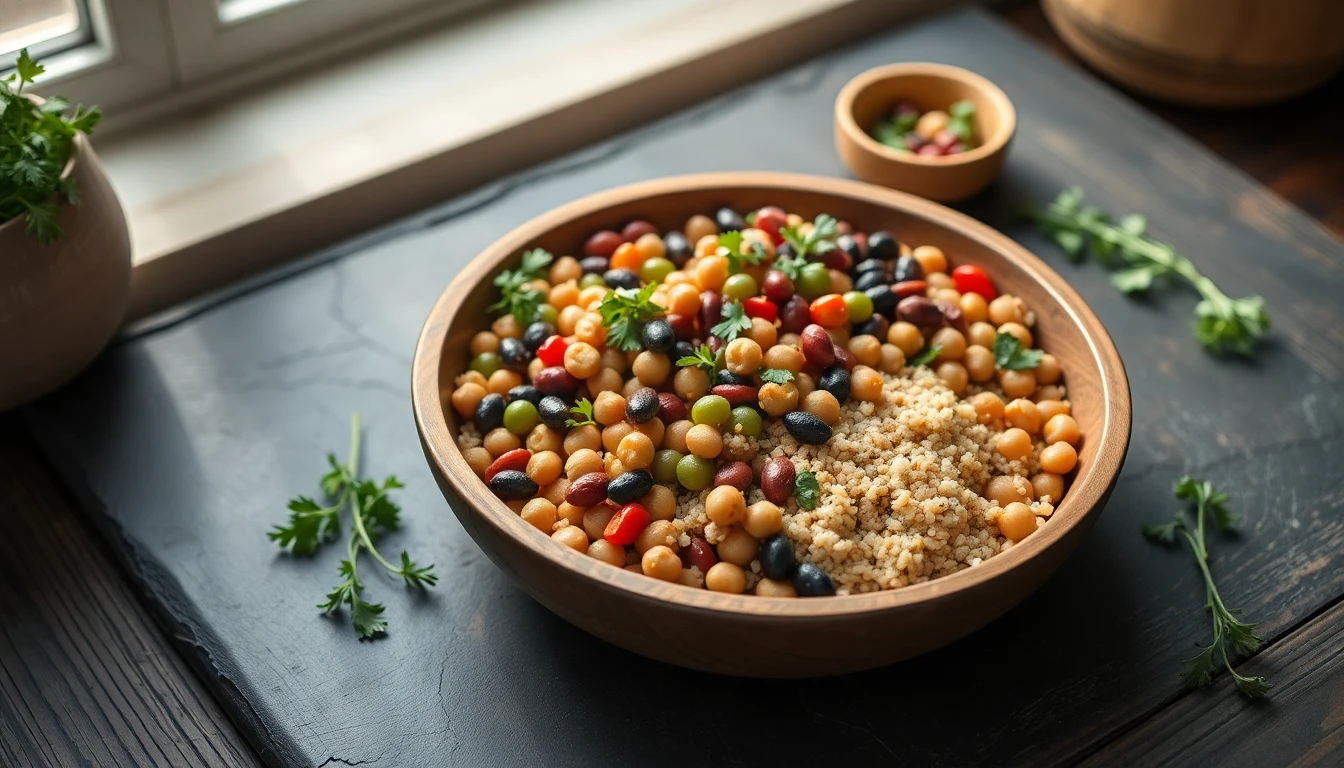
- Three bean salad with couscous — mixed beans with this wheat-based grain
Grains Plus Nuts or Seeds
This combination also balances amino acid profiles effectively.
- Porridge with almonds — oats topped with almond butter or sliced almonds
- Wholemeal pasta with pine nuts — common in Italian pesto dishes
- Rice with cashews — frequently found in Asian stir-fries
- Granola with seeds — oat-based granola mixed with pumpkin or sunflower seeds
Legumes Plus Seeds
- Lentil salad with sunflower seeds — a protein-rich lunch option
- Chickpea curry with sesame seeds — tahini-based sauces complement chickpea dishes
- Bean soup with pumpkin seeds — garnishing soups increases protein quality
Practical Strategies for Meeting Protein Needs
Rather than obsessing over combinations, focus on eating a variety of protein-rich plant foods throughout your day. This natural approach ensures you obtain all essential amino acids without complicated calculations.
- Include protein at every meal — aim for 15-25g protein per main meal
- Snack on protein-rich foods — nuts, seeds, hummus, or soya yoghurt between meals
- Eat the rainbow — varied colours often mean varied nutrient and amino acid profiles
- Keep portions adequate — some plant proteins require larger portions than animal sources to match protein content
- Choose whole grains — brown rice, wholemeal bread, and whole oats contain more protein than refined versions
- Don't fear legumes — beans, lentils, and peas should feature daily in a balanced vegan diet
Daily Protein Targets
The NHS recommends adults consume approximately 0.75g protein per kilogram of body weight daily. For a 70kg adult, that's roughly 52g daily. Vegan athletes or those building muscle may need 1.2-2.0g per kilogram. Spreading this across three meals and snacks makes the target easily achievable with plant foods.
Sample Day of Vegan Complete Proteins
Here's what a day of well-balanced vegan protein might look like:
- Breakfast — porridge made with soya milk, topped with chia seeds and almond butter (approximately 18g protein)
- Lunch — quinoa salad with chickpeas, mixed vegetables, and tahini dressing (approximately 22g protein)
- Dinner — lentil bolognese with wholemeal pasta, nutritional yeast, and side salad (approximately 25g protein)
- Snacks — handful of mixed nuts, hummus with vegetable sticks (approximately 12g protein)
- Total — approximately 77g protein, exceeding requirements for most adults
How FreshPlate Helps with Vegan Protein Planning
Keeping track of protein combinations can feel overwhelming, especially when you're also managing medications, health conditions, or several dietary requirements. This is where a few of FreshPlate's features can help.
You can log meals by photo, barcode or search, and if a pack isn't in any database, the app reads it off its own label on your phone: the nutrition table fills in the numbers, and the ingredients are checked against your allergens and food rules. Every food is stored per 100 g or ml with real measures, and a portion is only called a "serving" when the source declared one. If you make your own food, such as a lentil loaf or a tray bake, Cook measures it once from its ingredient lines, keeps it in your kitchen, and lets you log a slice or a portion in one tap from then on.
Every recipe the app generates is built around your own medication list, and you tell the app about your dietary and cultural food preferences when you get started. Each recipe has a For you tab showing what was actually checked against your allergens, diet and religious rules, why the recipe suits your goal and conditions, and whether it fits what is left of your day. For medical conditions the app steers rather than prescribes, leaning towards what public UK guidance from the NHS and BDA says suits the condition.
The Progress tab then answers how your day is going, why, and what to do next, with a "How we worked this out" tap behind every number and a minerals-and-vitamins panel against targets set for your body. Rather than stressing over every lunch, you can log what you eat, check the For you tab, and spend your energy enjoying varied vegan meals.
Frequently asked questions
Do vegans need to combine proteins at every meal?
+
No, you don't need to combine complementary proteins at every meal. Your body maintains an amino acid pool throughout the day, so eating a variety of plant proteins across your daily meals provides all essential amino acids. The 'complete protein at every meal' advice is outdated.
Which vegan foods are complete proteins on their own?
+
Quinoa, soya products (tofu, tempeh, edamame), buckwheat, hemp seeds, chia seeds, and amaranth all contain all nine essential amino acids and are considered complete proteins. These foods don't require pairing with others to meet amino acid needs.
What is the best vegan protein combination?
+
Classic combinations include grains with legumes (like rice and beans, or hummus with pitta), grains with nuts or seeds (porridge with almonds), and legumes with seeds. However, any varied selection of plant proteins throughout the day achieves the same result.
Can you get enough protein on a vegan diet in the UK?
+
Yes, absolutely. UK supermarkets stock abundant plant protein sources including beans, lentils, tofu, quinoa, nuts, seeds, and whole grains. Most vegans easily meet the NHS-recommended 0.75g protein per kilogram body weight by including these foods regularly.
How much protein do vegans need daily?
+
The NHS recommends approximately 0.75g of protein per kilogram of body weight for adults, regardless of diet type. Some nutritionists suggest vegans might benefit from slightly higher intakes (around 0.9g/kg) due to lower digestibility of some plant proteins, though this remains debated.
Sources
Did this answer your question?
Reece reads every reply. Questions we have not covered become new guides.
Make vegan nutrition one less thing to worry about.
Get our free vegan nutrition guide by email — the best food sources, what helps and hinders absorption, and a week of meal ideas. One genuinely useful email a week — no spam, unsubscribe anytime.
Free forever. You'll also be first in line for the FreshPlate app — with a free trial at launch.