Porridge Iron Content: How Much and How to Boost It
Plain porridge delivers 2–2.5 mg iron per 100 g. Fortified versions reach 8–14 mg. Learn which oats pack the most iron and how to increase absorption.

By Reece Douglas · Founder, FreshPlate
Listen to this article
Porridge Iron Content: How Much and How to Boost It
Porridge delivers a reliable iron contribution at breakfast. Plain oats contain 2–2.5 mg iron per 100 g dry weight, while fortified varieties reach 8–14 mg per 100 g. A typical 40 g serving of plain porridge provides around 1 mg iron, or 3–5.6 mg if you choose fortified oats.
Iron from oats is non-haem, which your body absorbs less efficiently than the haem iron in meat. Pairing porridge with vitamin C sources can triple absorption.
FreshPlate builds porridge recipes that fit your medications, conditions and iron targets, then explains in the For you tab why each one works for you—whether it avoids an allergen, suits a condition based on NHS guidance, or fits what is left of your day. The app tracks absorption enhancers and inhibitors across all your meals, so if you take iron tablets or manage anaemia, it suggests when to schedule tea, coffee or calcium-rich foods. I built it that way because nutrient timing matters, and most apps treat breakfast in isolation. It was one of the first breakfasts I received on FreshPlate - simple, quick and tasty as you can combine it with so many things!
How Much Iron Is in Different Types of Porridge?
Plain rolled oats contain 2.4 mg iron per 100 g dry weight. Steel-cut oats deliver 2.5 mg per 100 g. Instant oat sachets vary: plain versions sit around 2.3 mg per 100 g, while fortified instant porridge reaches 8–14 mg per 100 g depending on brand.
A standard 40 g serving of plain oats provides roughly 1 mg iron, contributing 7% of the 14 mg daily requirement for men and 6% of the 14.8 mg target for pre-menopausal women. Fortified versions deliver 3.2–5.6 mg, covering 20–40% of daily needs.
- Rolled oats (plain) — 2.4 mg per 100 g — reliable baseline with no added fortificants
- Steel-cut oats (plain) — 2.5 mg per 100 g — minimal processing, similar iron to rolled
- Instant oats (plain) — 2.3 mg per 100 g — convenient but marginally lower than whole oats
- Fortified instant porridge — 8–14 mg per 100 g — check labels; some brands add iron salts to reach high levels
- Jumbo oats (plain) — 2.4 mg per 100 g — same content as rolled, just larger flakes
Does Cooking Method Change Iron Content?
Cooking porridge in water or milk does not destroy iron; the mineral is stable at boiling temperatures. The iron content per 100 g of cooked porridge drops because water dilutes the oats. A 40 g dry portion becomes roughly 200 g cooked, so the final bowl contains the same absolute iron but spread across a larger weight.
Why Fortified Porridge Delivers More Iron
Manufacturers add iron salts—typically ferrous fumarate or ferric pyrophosphate—to instant oat sachets and some branded rolled-oat products. These compounds boost iron content three to six times above the natural level. Fortified porridge helps people meet daily iron targets without relying solely on meat or supplements.
Fortification is most common in instant sachets. Check the nutrition label: any product listing more than 3 mg iron per 100 g has been fortified. The added iron is still non-haem, so absorption strategies remain the same.
Are There Downsides to Fortified Oats?
Fortified porridge is safe for most people, but those with haemochromatosis or other iron-overload conditions should choose plain oats and consult their GP. High doses of supplemental iron can cause constipation or nausea in sensitive individuals, though the levels in fortified porridge rarely trigger symptoms. If you take iron tablets separately, total intake may exceed the 17 mg upper safe limit for supplements, though dietary iron from food carries no upper threshold.
How to Boost Iron Absorption from Porridge
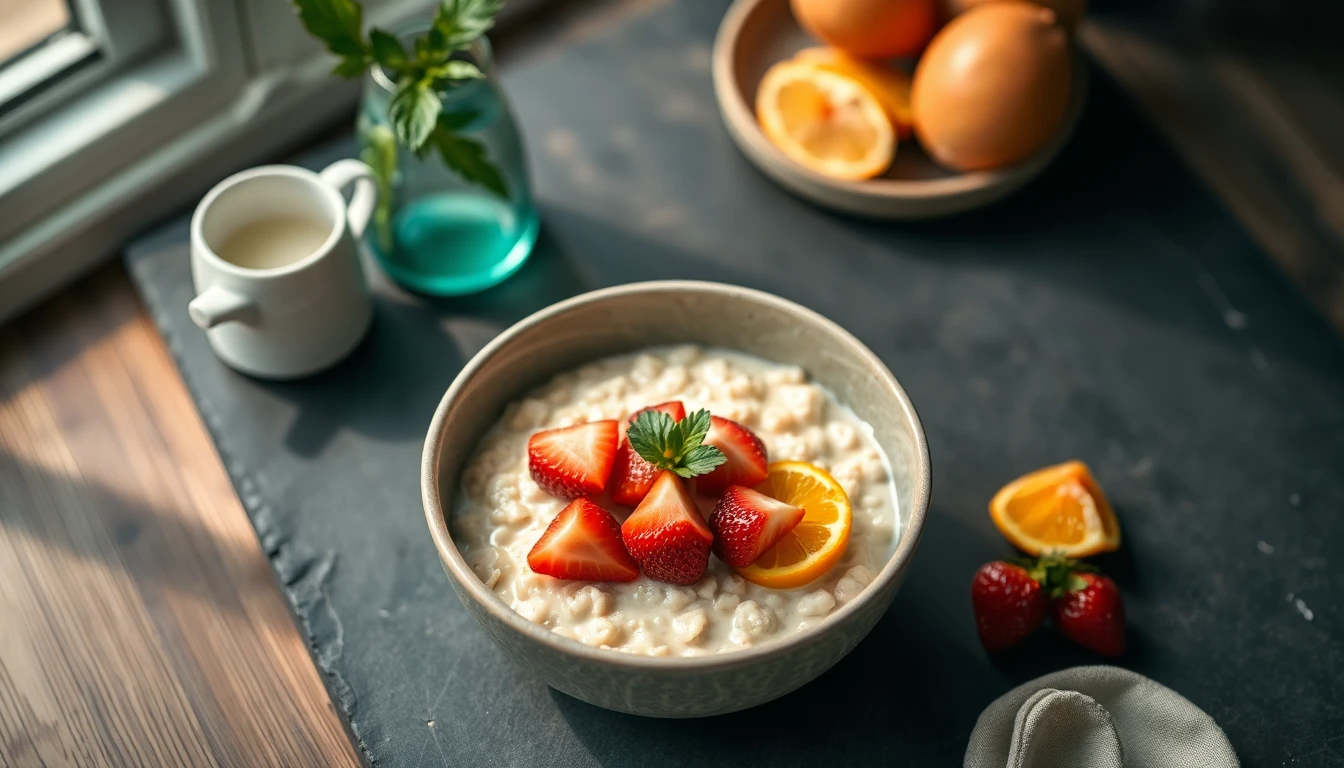
Non-haem iron absorption ranges from 2–20%, depending on what else is in your meal. Vitamin C can triple uptake by converting ferric iron to the more soluble ferrous form in your stomach. Aim for at least 25 mg vitamin C alongside your porridge—equivalent to half an orange or a handful of strawberries.
Tannins in tea and coffee, calcium in milk, and phytates in bran all inhibit non-haem iron absorption. Drinking tea with breakfast can halve iron uptake. If iron intake is a priority, save your tea for an hour after eating or switch to orange juice.
- Orange slices (80 g) — ~50 mg vitamin C — doubles to triples absorption when eaten with porridge
- Strawberries (100 g) — ~60 mg vitamin C — fresh or frozen, mix directly into your bowl
- Kiwi fruit (1 medium) — ~64 mg vitamin C — slice on top for a sharp, sweet boost
- Blackcurrants (50 g) — ~100 mg vitamin C — one of the richest UK fruit sources
- Red pepper (raw, 50 g) — ~64 mg vitamin C — unconventional but effective if you prefer savoury porridge
Should You Avoid Milk in Porridge If You Need More Iron?
Calcium competes with iron for absorption in the intestine. A 200 ml glass of semi-skimmed milk contains roughly 240 mg calcium, which can reduce non-haem iron uptake by 30–50%. If you are managing anaemia or low ferritin, cook porridge with water and add plant-based milk fortified with calcium only at a different meal. Alternatively, use a small splash of milk for flavour and rely on vitamin C-rich toppings to offset the calcium effect.
What About Tea and Coffee with Breakfast?
Polyphenols in tea and coffee bind non-haem iron in the gut, cutting absorption by 50–70%. A single cup of black tea alongside porridge can halve the iron you absorb. Wait at least one hour after eating before drinking tea or coffee, or switch to herbal teas that contain fewer tannins. Rooibos and peppermint are low-tannin alternatives that do not interfere with iron.
Porridge Recipe Ideas to Maximise Iron Intake
Start with 40 g fortified oats cooked in 200 ml water. Top with 100 g sliced strawberries and a teaspoon of pumpkin seeds (1.5 mg iron per 10 g). This combination delivers around 5 mg iron and 60 mg vitamin C, covering one-third of daily iron needs for most adults.
For a savoury option, cook plain oats in vegetable stock and stir through 50 g finely chopped spinach (0.6 mg iron) and 50 g diced red pepper (64 mg vitamin C). Finish with a poached egg (0.9 mg iron, partly haem) for extra protein and iron variety.
Fortified Porridge with Citrus and Seeds
Cook 40 g fortified instant oats with water. Stir in the zest of half an orange, then top with orange segments (50 mg vitamin C) and a tablespoon of sunflower seeds (0.6 mg iron). The citrus enhances absorption of both the oat iron and the seed iron, and the seeds add texture.
Berry and Kiwi Bowl
Use 40 g plain jumbo oats. Once cooked, mix in 50 g blueberries and top with one sliced kiwi (64 mg vitamin C). Blueberries contribute antioxidants but minimal vitamin C; the kiwi does the heavy lifting for iron absorption. A drizzle of tahini adds 0.9 mg iron per tablespoon.
Should You Choose Porridge Over Other Iron-Rich Breakfasts?
Porridge is a practical iron source, especially in fortified form, but not the highest-iron breakfast option. A 30 g serving of fortified breakfast cereal can deliver 4–12 mg iron, while two slices of wholemeal toast provide around 1.8 mg. Eggs contribute 1.8 mg per two-egg serving, with a portion as haem iron that absorbs more readily.
Porridge excels in versatility: you control the toppings, so you can tailor vitamin C and avoid absorption inhibitors. It is also gentler on the stomach than high-fibre bran cereals, which contain phytates that bind iron. If you rotate breakfasts, include porridge two to three times a week and pair it strategically with fruit.
- Fortified cereal — 4–12 mg per 30 g — higher iron, but often high in sugar and lower in satiety
- Wholemeal toast (2 slices) — ~1.8 mg — pairs well with baked beans (1.4 mg per 100 g) for a combined iron boost
- Scrambled eggs (2 eggs) — ~1.8 mg — includes haem iron for better absorption, no vitamin C needed
- Baked beans (100 g) — ~1.4 mg — non-haem, but tomato sauce provides some vitamin C to aid uptake
How FreshPlate Can Help With Breakfast Iron
FreshPlate builds every recipe around your own medication list, and for medical conditions it steers rather than prescribes: recipes lean towards what public UK guidance (NHS, BDA) says suits the condition, and the app never claims to treat, prevent or cure anything. Each recipe has a For you tab that lists your medicines and gives a line on why the recipe suits your goal and conditions, along with whether it fits what is left of your day. Medicines are read by their active ingredient, so a brand name and its generic are treated the same way. If you take iron tablets, there is no specific rule for them in the app, so ask your pharmacist about timing.
When you want to see how your breakfast fits into the wider picture, the Progress tab answers how the day is going, why, and what to do next. It has a minerals-and-vitamins panel against targets set for your body, and a "How we worked this out" tap behind every number, with the guidance named by body (NHS, WHO, UK RNI). If you are managing anaemia or another condition that needs careful nutrient planning, your doctor or dietitian is the right person to set your iron plan. You can also use the free food–medication interaction checker on the website to see the foods to watch with any medicine you take, and keep the porridge recipes you like on your shopping list.
Frequently asked questions
Does porridge have more iron than Weetabix?
+
Plain porridge (40 g dry) provides around 1 mg iron, while two Weetabix biscuits deliver approximately 3 mg due to fortification. Fortified instant porridge can match or exceed Weetabix, offering 3–5.6 mg per 40 g serving.
Can I eat porridge every day for iron?
+
Yes, daily porridge is safe and contributes to iron intake, especially if fortified. Pair with vitamin C-rich fruit and vary your diet to include other iron sources like pulses, meat, or leafy greens for a balanced approach.
Is oat milk fortified with iron?
+
Most oat milk brands are not fortified with iron; they typically add calcium, vitamin D, and B12. Check the label if iron fortification is important—some niche brands include it, but it is uncommon.
Does soaking oats reduce iron content?
+
Soaking oats overnight does not remove iron but can reduce phytate levels, which may slightly improve iron absorption. The iron content per 100 g remains unchanged.
Which porridge brand has the most iron?
+
Fortified instant porridge sachets from brands such as Quaker or supermarket own-labels often contain 8–14 mg iron per 100 g. Check nutrition labels, as formulations vary by product line.
Sources
Did this answer your question?
Reece reads every reply. Questions we have not covered become new guides.
Enjoyed these? There’s more where they came from.
Get fresh iron recipes and meal ideas by email — practical, healthy, and built for real weeknights. One genuinely useful email a week — no spam, unsubscribe anytime.
Free forever. You'll also be first in line for the FreshPlate app — with a free trial at launch.