Ramipril and Milk: Does It Help or Interfere?
Can you take ramipril with milk? Milk does not affect absorption and is fine in normal amounts, but it contains potassium. Here is what matters and what does not.

By Reece Douglas · Founder, FreshPlate
Listen to this article
Ramipril and Milk: Does It Help or Interfere?
Yes, you can take ramipril with milk. The NHS says you can take it with or without food, and nothing in milk stops the tablet or capsule being absorbed.
Milk contains potassium, and ramipril makes your body hold on to more of it. For most people that matters little. Below: where milk sits on the risk scale, whether it settles an upset stomach, and when to check with your pharmacist.
Here is what I'd do. Swallow your ramipril whole with water, as the NHS advises, at the same time every day, because consistency matters more than anything you eat around it. Have your milk in tea, on cereal or in a glass without worrying; a glass or two a day is an ordinary part of a healthy diet. Leave salt substitutes such as Lo-Salt on the shelf, since they are high in potassium, and take care with alcohol in the first few days. If you have kidney problems, or you drink a lot of milk, ask your pharmacist first.
Can you take ramipril with milk?
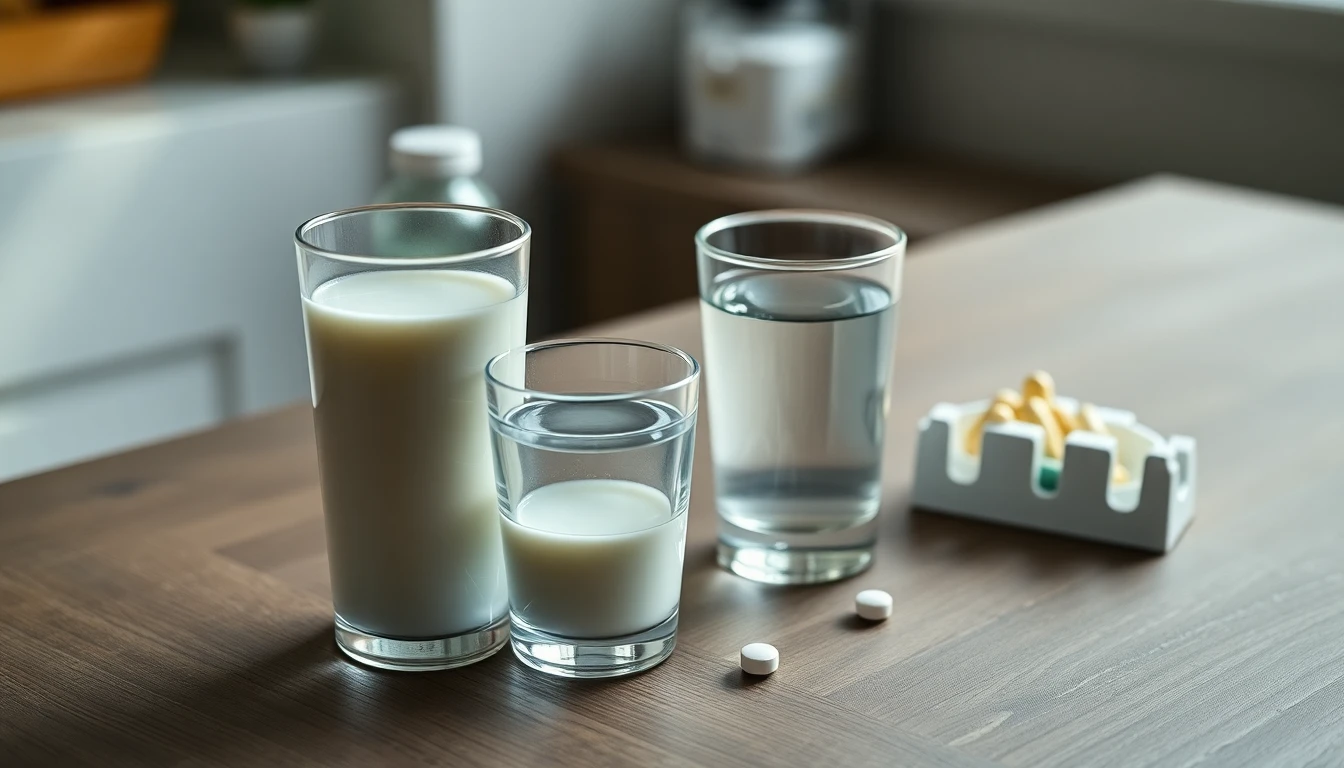
Yes, you can swallow ramipril with milk, although the NHS advises swallowing tablets or capsules whole with a drink of water. Milk is not forbidden, but water is the simplest default.
The NHS says you can take ramipril with or without food, at the same time each day. Food makes no meaningful difference to the dose, so a glass of milk does not either. Consistency matters most: take it at the same time every day so the effect stays steady.
Taking your dose at breakfast with milky tea, cereal or a latte is fine.
- Water — best default — this is what the NHS advises for swallowing the tablet or capsule whole
- Milk — fine — no known effect on how ramipril is absorbed, and the NHS says food is optional
- Apple juice — fine — only relevant if you open a capsule, in which case mix the contents in about 120 mL and drink all of it
- Alcohol — take care — can lower your blood pressure too far and make you dizzy, especially in the first few days
What the experts say
“You can take ramipril with or without food.”
Does milk affect how ramipril is absorbed?
No. There is no established interaction between milk and ramipril absorption, and the NHS places no restriction on taking it with food.
Ramipril differs from some other medicines here. Bisphosphonates such as alendronic acid, and certain antibiotics, bind to calcium and need to be kept away from dairy. Ramipril does not work that way, so you do not need a gap between your dose and a glass of milk. Other tablets you take have their own rules; our guide to alendronic acid and food timing shows how different a calcium-sensitive medicine looks.
What about taking a capsule opened into milk?
The published guidance for opening ramipril capsules mentions applesauce, water or apple juice, not milk, so stick to those. Use about 120 mL of liquid and drink all of it so you get the full dose.
Most people never need to do this. If you struggle to swallow capsules, ask your pharmacist whether a different form would suit you better.
Is the potassium in milk a problem with ramipril?
For most people, no: normal amounts of milk are fine, but ramipril raises blood potassium, so keep milk in proportion rather than treating it as unlimited.
Ramipril is an ACE inhibitor, and these medicines reduce the amount of potassium your kidneys remove. That is why the NHS tells people not to use salt substitutes such as Lo-Salt, which are high in potassium. Milk is very different. A glass or two a day, or milk in tea and cereal, is an ordinary part of a healthy diet, and the NHS recommends a diet that includes fat-free or low-fat dairy products for people with high blood pressure or heart failure.
Milk becomes relevant when your potassium is already high or your kidneys are not working well. Your doctor may then monitor your blood levels more closely and give specific advice. Our overview of potassium foods and ACE inhibitors covers which foods contribute most.
- Salt substitutes (Lo-Salt) — avoid — high in potassium and can push your blood level too high with ramipril
- Milk in normal amounts — fine — a standard part of a balanced diet; the NHS recommends low-fat dairy for blood pressure
- Large daily volumes or potassium-fortified products — check first — worth asking your pharmacist if you have kidney problems
- Fruit and vegetables — fine — the NHS encourages plenty of them for high blood pressure and heart failure
Skimmed, semi-skimmed or full-fat?
Potassium content is broadly similar across cow's milk types, so the choice is about fat and calories rather than ramipril. NHS dietary advice for blood pressure points to low-fat or fat-free dairy.
Plant milks vary. Some are fortified and labels differ between brands, so check them if you have been told to watch your potassium.
When to ask for a blood test
Very high potassium can cause muscle weakness, palpitations or an irregular heartbeat. If you notice these symptoms, contact your GP, pharmacist or NHS 111 promptly. Do not stop taking ramipril without advice.
Does milk help with ramipril stomach upset?
Possibly a little, but there is no strong evidence either way, and ramipril is not usually taken with food to protect the stomach because it does not typically irritate it.
Feeling sick is a recognised side effect of ramipril, as are headaches, dizziness and a dry cough. If nausea bothers you, taking your dose with a small snack is allowed, since the NHS says food makes no difference to how it works. A glass of milk with toast is a reasonable thing to try, but it is a comfort measure, not a proven fix.
If you have vomiting or diarrhoea while taking ramipril, drink plenty of fluids such as water or squash to prevent dehydration, because losing fluid can affect your blood pressure and kidneys. Milk can be heavy when you are being sick, so water is usually the better choice. Speak to your pharmacist or GP if it carries on.
Milk will not help with dizziness. Alcohol can make it worse, and the NHS suggests avoiding alcohol for the first few days or after a dose increase until you see how ramipril affects you.
- Mild nausea — milk or a snack is fine — no evidence it harms, and some people find it settles things
- Vomiting or diarrhoea — sip water or squash — the NHS advises plenty of fluids to prevent dehydration
- Persistent sickness — speak to your pharmacist or GP — do not stop the medicine without advice
- Dizziness on standing — sit or lie down, avoid alcohol — milk will not help and the cause needs checking if it continues
What else is worth watching alongside milk?
Salt substitutes and alcohol deserve far more attention than milk, and a varied diet takes care of the rest.
The NHS recommends plenty of fruit and vegetables, wholegrains, low-fat dairy and lean protein if you have high blood pressure or heart failure, so milk sits comfortably in that pattern. Our guide to dairy-free calcium-rich recipes helps if you would rather cut back on dairy for your own reasons, and nothing about ramipril requires you to.
- Salt substitutes (Lo-Salt) — avoid — high in potassium
- Alcohol — take care — can lower your blood pressure too far and cause dizziness or light-headedness
- Water — fine — the best choice for swallowing and for rehydrating if you are ill
- Apple juice — fine — only if you are mixing the contents of an opened capsule
How FreshPlate handles milk and ramipril for you
FreshPlate has a free food-medication interaction checker on the website. Type in a medication or its brand name and you can see the foods to watch in seconds. It has no specific rule for ramipril, so for ramipril and milk your pharmacist is the right person to ask.
In the app, every recipe is built around your own medication list. You add medicines by brand or generic name from the NHS's own medicines list, and the For you tab on each recipe lists them. Where the checker has quoted the NHS page or US FDA label on food, you'll see those words word for word, with a link to the checker page. Where it hasn't, the tab tells you there is no advice on file yet and points you to your pharmacist. None of this replaces your pharmacist or doctor.
Frequently asked questions
Can I take ramipril with milk?
+
Yes. The NHS says you can take ramipril with or without food, and milk does not interfere with absorption. Water is still the standard drink for swallowing the tablet or capsule whole.
Does milk raise potassium when you take ramipril?
+
Milk contains potassium, and ramipril makes your body retain more, but normal amounts are fine for most people. The bigger risk is salt substitutes such as Lo-Salt. If you have kidney problems, ask your pharmacist or GP about dairy.
Should I drink milk if ramipril makes me feel sick?
+
You can, as food does not change how ramipril works, and some people find a small snack settles nausea. If you are vomiting or have diarrhoea, drink plenty of water or squash to avoid dehydration and speak to your pharmacist if it continues.
What drinks should I avoid with ramipril?
+
Alcohol needs care, as it can lower your blood pressure too much and cause dizziness, especially in the first few days or after a dose increase. Avoid salt substitutes, which are high in potassium. Water, tea, coffee and milk in normal amounts are generally fine.
Is low-fat milk better than full-fat milk with ramipril?
+
Ramipril does not distinguish between them. NHS dietary advice for high blood pressure and heart failure favours fat-free or low-fat dairy for heart health, so it is a sensible choice, but it is about your diet rather than the medicine.
Sources
Did this answer your question?
Reece reads every reply. Questions we have not covered become new guides.
Eating around ramipril shouldn’t be guesswork.
Get our free ramipril food guide by email — the foods to watch, safe swaps, and meal ideas that work with your medication. One genuinely useful email a week — no spam, unsubscribe anytime.
Free forever. You'll also be first in line for the FreshPlate app — with a free trial at launch.