Diclofenac and Alcohol: Stomach Risks and Safer Habits
Can you drink on diclofenac? Yes, within 14 units a week, but alcohol adds to stomach irritation and ulcer risk. Learn how to take it with food and safer options.

By Reece Douglas · Founder, FreshPlate
Yes, you can drink alcohol while taking diclofenac, but the NHS says to stay within 14 units a week. Both the drug and the drink irritate the stomach lining, so together they raise the chance of stomach pain, ulcers and bleeding.
Below: where the extra risk comes from, how to take diclofenac so it is kinder to your stomach, which warning signs mean you should get help, and what to ask a pharmacist about alternatives.
Can you drink alcohol with diclofenac?
Yes, as long as you keep within the national guideline of no more than 14 units a week for men and women. The NHS says drinking too much may irritate your stomach and carries a risk of stomach ulcer.
Fourteen units is a ceiling, not a target. If you have a sore stomach, a history of ulcers, recurring indigestion, or take diclofenac daily for weeks, drinking less, or not at all, is safer. Diclofenac alone can upset the stomach, so alcohol adds to a load the lining already carries.
- Occasional drink with food — take care — keeps you well inside 14 units a week and the meal helps protect your stomach
- Regular heavy drinking — avoid — two irritants on the stomach lining raise the chance of ulcers and bleeding
- Drinking on an empty stomach — avoid — alcohol and diclofenac hit the lining with nothing to cushion them
- Binge drinking in one evening — avoid — a large dose of alcohol in a short time is harder on the stomach, even if the weekly total looks fine
What counts as 14 units?
A unit is 10ml of pure alcohol. A pint of average-strength lager is about 2 to 3 units, a 175ml glass of wine is about 2 units, and a single 25ml measure of spirits is 1 unit. Fourteen units is roughly six 175ml glasses of wine or six pints of average-strength lager across a week.
The NHS advises spreading drinking over three or more days rather than saving it up. On diclofenac, spread it out and drink with a meal.
What the experts say
“Yes, you can drink alcohol while taking diclofenac, but stick to the national guidelines of no more than 14 units a week for men and women.”
Why do diclofenac and alcohol irritate the stomach?
Diclofenac is a non-steroidal anti-inflammatory drug (NSAID), and NSAIDs can upset or irritate the stomach, which is why the NHS says to take it with milk or food. Alcohol also irritates the stomach lining. Together, the lining has less protection against acid, and irritation can progress to an ulcer.
The two do not cancel each other out or cause a dramatic chemical reaction. Two separate stomach irritants simply stack up on the same few millimetres of tissue.
- Diclofenac alone — take care — can cause indigestion, stomach pain and nausea, especially without food
- Alcohol alone — take care — can irritate the stomach lining, particularly in larger amounts
- Both together — take care — two irritants on the same lining, so the risk of an ulcer is higher than with either one by itself
Who is more at risk?
The risk is higher if you have had a stomach ulcer or bleeding before, take diclofenac regularly rather than for a few days, or take other medicines that can irritate the stomach or affect bleeding. Tell your pharmacist or GP about all your medicines, including anything bought over the counter. The NHS notes diclofenac is not suitable for everyone, and a past ulcer is exactly the detail that matters.
Should you take diclofenac with food or milk?
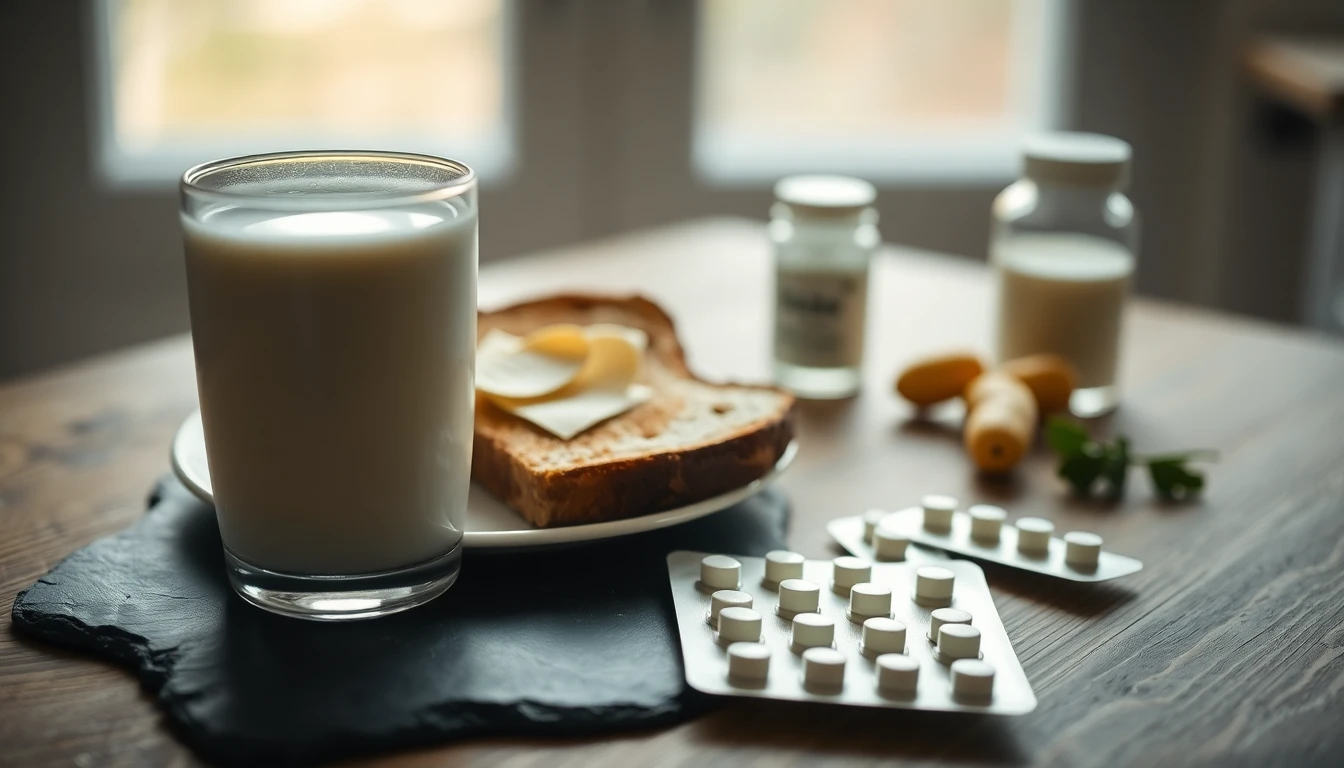
Yes, take diclofenac tablets or capsules with a drink of milk, or if you use water, after a meal or snack. The NHS says this makes them less likely to upset or irritate your stomach.
This matters more on days you plan to drink. A tablet on an empty stomach followed by a glass of wine is the combination to avoid. A tablet after dinner, with the drink alongside the meal, is gentler.
- Tablet with a glass of milk — fine — the NHS recommends it to reduce stomach irritation
- Tablet with water after a meal or snack — fine — the food cushions the stomach lining
- Tablet with water on an empty stomach — avoid where you can — more likely to upset or irritate your stomach
- Tablet then an alcoholic drink soon after, no food — avoid — alcohol and diclofenac meet on an unprotected lining
Keep meals simple if you feel sick
Nausea is a common side effect of diclofenac. If you feel sick, the NHS advises simple meals, avoiding rich or spicy food, and taking diclofenac after eating. Plain toast, rice, a banana or a bowl of soup is a reasonable base. For more gentle ideas, our anti-inflammatory foods list is a good starting point.
- Rich or spicy food — take care — can make nausea worse, so keep to simple meals if you feel sick
- Milk — fine — the NHS suggests taking tablets or capsules with it to cut stomach irritation
- Water or squash — fine — drink plenty to avoid dehydration if you have diarrhoea or are being sick
What stomach warning signs mean you should get help?
Black or tarry stools, vomiting blood or material that looks like coffee grounds, and severe or persistent stomach pain all need urgent medical help; stop and seek advice rather than waiting to see if they settle. These can signal bleeding in the stomach or gut, the most serious risk when diclofenac is combined with heavy drinking.
Milder signs matter too. Indigestion that keeps returning, a burning pain in the upper stomach, or feeling full and sick after small amounts of food can all point to irritation. Do not just add an antacid and carry on drinking. Speak to a pharmacist or your GP and say how much alcohol you drink, because they can only judge the risk with an honest answer.
Dehydration is the other concern. If you have diarrhoea or are being sick, drink lots of fluids such as water or squash, as the NHS advises. Leave alcohol out until you are well again.
- Black or tarry stools — urgent — may mean bleeding in the stomach or gut, so get medical help straight away
- Vomiting blood or coffee-ground-looking material — urgent — needs emergency care
- Severe or lasting stomach pain — urgent — do not wait for it to pass
- Recurring indigestion or burning pain — speak to a pharmacist or GP — early irritation is easier to deal with than an ulcer
What gentler options can you ask a pharmacist about?
Ask a pharmacist whether a different pain relief approach would suit you, because for some people a gentler option does the job with less stomach risk. Do not swap or stop prescribed diclofenac yourself. The right alternative depends on why you take it, your other conditions and your other medicines.
Questions worth asking: Is there a non-tablet form, such as a gel applied to the skin, that could work for my pain? Would paracetamol be enough for this type of pain? Is there a lower dose or shorter course I could use? Do I need a stomach-protecting medicine alongside diclofenac if I will be taking it for a long time? Your pharmacist or GP can answer these against your own history. To compare with another anti-inflammatory, see our naproxen and alcohol guide.
Be honest about alcohol in that conversation. If you drink more than 14 units a week, say so. It may change which option is safest, and adjusting the plan is better than hoping for the best.
- Gel or topical form — ask about it — acts where you apply it, which may suit some localised joint or muscle pain
- Paracetamol — ask about it — does not irritate the stomach in the same way, though it will not help every type of pain
- Lower dose or shorter course — ask about it — less time on an NSAID means less time exposed to stomach irritation
- Stomach-protecting medicine — ask about it — may be suggested alongside diclofenac for longer courses or higher-risk people
How FreshPlate helps you plan around this
FreshPlate's free food and medication interaction checker lets you look up diclofenac and see which foods and drinks, including alcohol, milk and spicy dishes, call for care. Add diclofenac to your profile and FreshPlate builds your recipes around it automatically, favouring simple, stomach-friendly meals and flagging the points above. It supports the advice from your pharmacist or GP rather than replacing it.
Frequently asked questions
Can I have one glass of wine while taking diclofenac?
+
Yes, an occasional drink is fine for most people if you stay within 14 units a week. Have it with a meal, not on an empty stomach, and skip it if your stomach is already sore.
How long after taking diclofenac can I drink alcohol?
+
The NHS does not set a waiting time. Keep within 14 units a week and take each dose with milk, or after a meal or snack. Drinking with food is gentler than drinking alone.
Does diclofenac cause stomach ulcers?
+
Diclofenac can irritate the stomach, and heavy drinking adds to that risk. The NHS says drinking too much alcohol may irritate your stomach and there is a risk you could get a stomach ulcer.
Is it better to take diclofenac with milk or food?
+
Both work. The NHS recommends swallowing tablets or capsules with a drink of milk, or taking them after a meal or snack if you use water. Either way, they are less likely to upset your stomach.
What should I eat if diclofenac makes me feel sick?
+
Stick to simple meals and avoid rich or spicy food, as the NHS advises. It can also help to take diclofenac after eating. If the sickness continues, speak to a pharmacist or GP.
Sources
Did this answer your question?
Reece reads every reply. Questions we have not covered become new guides.
Eating around diclofenac shouldn’t be guesswork.
Get our free diclofenac food guide by email — the foods to watch, safe swaps, and meal ideas that work with your medication. One genuinely useful email a week — no spam, unsubscribe anytime.
Free forever. You'll also be first in line for the FreshPlate app — with a free trial at launch.