Boron Rich Foods: Bone Health & Hormones (UK Guide)
Boron rich foods explained: prunes, avocado, raisins and nuts, what boron may do for bones and hormones, how much you need, and what the evidence really says.

By Reece Douglas · Founder, FreshPlate
Listen to this article
Boron Rich Foods: Bone Health & Hormones (UK Guide)
Boron is a trace mineral found mostly in plant foods, especially dried fruit, nuts, avocado and pulses. A normal mixed diet gives roughly 1 to 2 mg a day.
It gets attention for bone health and hormone metabolism. Some of that interest is justified, but the research is thin. This guide separates what is known from what is claimed, and shows where boron sits in your food.
Which foods are rich in boron?
Dried fruit, nuts, avocado and pulses are the richest everyday sources of boron, with prunes and raisins usually at the top of food tables. Levels in plant foods depend on the soil they grew in, so figures vary and any list is approximate.
Animal foods, including meat, fish and dairy, contain very little. Vegetarians and people eating plenty of fruit and nuts usually take in more than those on a meat-heavy, low-plant diet.
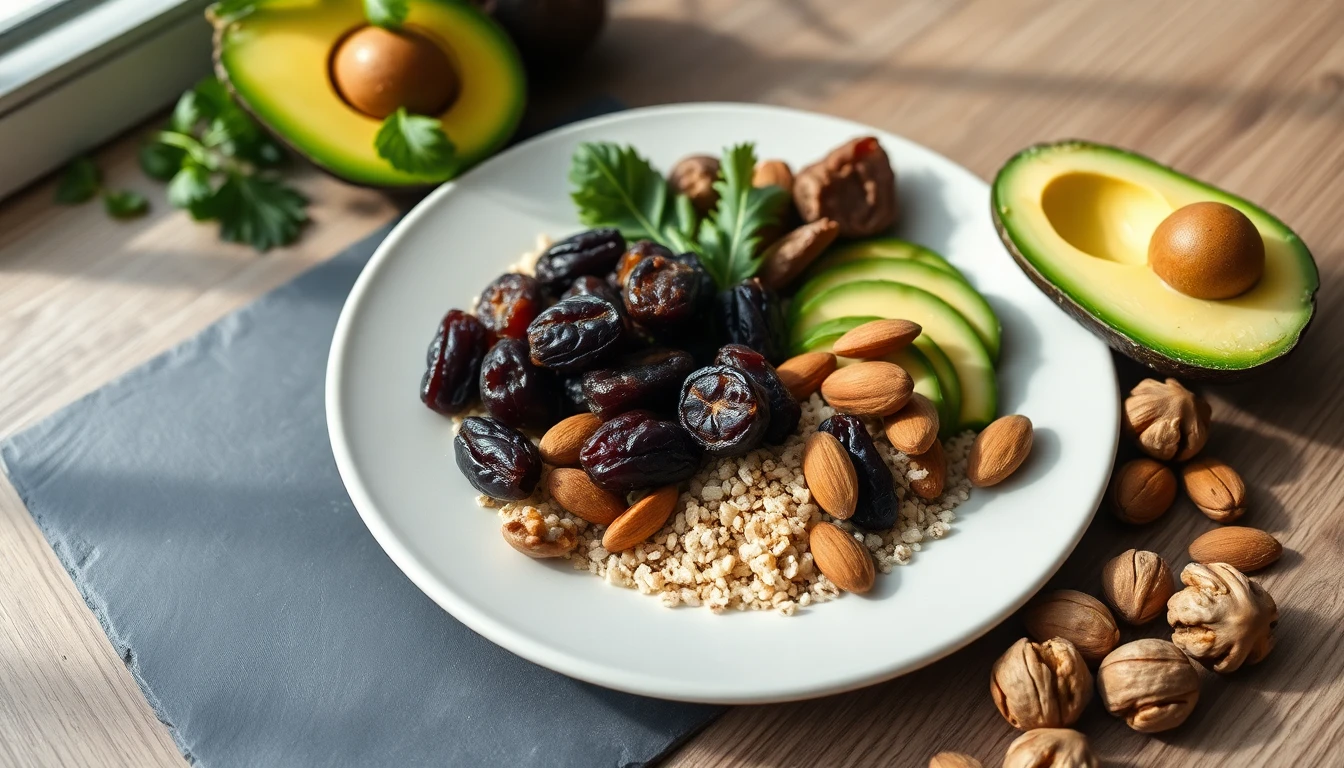
- Prunes (about 5 prunes, 50 g) — roughly 1 to 2 mg — the richest common source in most food tables
- Raisins (small 40 g handful) — roughly 0.9 to 1 mg — easy to add to porridge or yoghurt
- Avocado (half, about 70 g) — roughly 0.7 to 1 mg — also provides potassium and fibre
- Peanuts and peanut butter (30 g) — roughly 0.5 mg — check labels for added sugar and salt
- Almonds and walnuts (30 g) — roughly 0.3 to 0.5 mg — a practical daily snack
- Dried apricots and dates (30 g) — roughly 0.3 to 0.6 mg — higher in sugar, so keep portions modest
- Pulses such as red kidney beans (80 g cooked) — roughly 0.3 mg — a cheaper, filling source
- Apples, pears, grapes and bananas — around 0.1 to 0.3 mg a portion — small amounts that add up
- Coffee and red wine — small amounts — they contribute, but they are not reasons to drink either
Why quantities vary
Boron content depends on soil, region and processing, so the numbers above are indicative. Drying concentrates boron along with sugar, which is why dried fruit scores so well.
Foods that are poor sources
Meat, fish, eggs, dairy, white bread and most refined cereals provide little boron. A diet built on these, with few fruits, nuts or vegetables, is likely to be low.
How much boron do you need each day?
There is no UK reference intake for boron, because it has not been proven essential for humans. The US National Institutes of Health states no recommended dietary allowance exists, though it sets an upper limit of 20 mg a day for adults.
Typical food intakes sit around 1 to 2 mg a day, and studies reporting benefits usually use 3 mg or more. Food alone will very unlikely take you near the upper limit.
- Typical diet intake — about 1 to 2 mg a day — no action needed
- Intake used in most trials — about 3 mg a day — achievable from food with prunes, avocado and nuts
- Upper limit for adults (US NIH) — 20 mg a day — more than you would reach through food
- Pregnancy and breastfeeding — stick to food sources — speak to a pharmacist or midwife before any supplement
Does boron help bone density?
Possibly, but the evidence is limited and mostly from small or older studies. Boron appears to influence how the body handles calcium, magnesium and vitamin D, all of which matter for bone, and low-boron diets have been linked in animal and short human studies to changes in mineral balance.
No UK body recommends boron to prevent or treat osteoporosis. The better-established foundations are enough calcium, vitamin D, protein, weight-bearing exercise and, where prescribed, bone medication.
- Calcium (700 mg a day for adults) — essential — the NHS figure to aim for from food
- Vitamin D (10 micrograms a day) — essential — particularly October to March in the UK
- Weight-bearing exercise — strong evidence — walking, stair climbing, resistance work
- Boron from food — optional extra — supports a plant-rich diet but is not a treatment
If you take alendronic acid
If you take a bisphosphonate, your timing rules matter far more than boron. Alendronic acid must be taken on an empty stomach with plain water, and food, tea and coffee reduce absorption. Our alendronic acid food timing guide sets out the exact windows. Prunes or dried fruit should come well after your dose, not with it.
Calcium without dairy
Many boron-rich foods, including almonds, pulses and dried fruit, also contribute some calcium. If you avoid dairy, our guide to calcium without dairy foods shows how to cover the 700 mg target.
Can boron affect testosterone and hormones?
Boron may modestly influence hormone metabolism, but it is not a proven way to raise testosterone. A small study in healthy men found that 10 mg a day for a week was associated with a rise in free testosterone and a fall in oestradiol. The study was short and tiny, and has not been replicated at scale.
Boron is thought to affect how sex hormones are processed and how much stays free rather than bound to proteins. That is a mechanism, not a clinical result. If you have symptoms of low testosterone, such as persistent tiredness, low libido or loss of muscle, see your GP for a blood test rather than trying supplements.
- Eating prunes, nuts and avocado — safe — supports overall diet quality with no downside for most people
- Boron supplement of 3 mg — low risk — evidence for hormones is weak
- Boron supplement of 10 mg or more — limit — only studied short term; discuss with a pharmacist first
- Buying 'testosterone booster' products — avoid — products are poorly regulated and often combine several ingredients
If you take hormone-affecting medicines
If you take anastrozole or another hormone therapy, do not add a boron supplement without checking with your pharmacist or oncology team. Our anastrozole food timing and absorption guide covers what is known about food and this medicine.
Is a boron supplement worth taking?
For most people, no. Food provides what the body appears to use, and the benefits suggested in research are small and uncertain. Supplements typically contain 3 mg or more, which is two to three times your usual daily intake.
Boron is excreted through the kidneys, so people with kidney disease should avoid supplements unless a clinician advises otherwise. High doses can cause nausea, diarrhoea and headache, and very high intakes are harmful.
To get more boron, use food: a handful of nuts, a few prunes and half an avocado over the day gets you to around 3 mg without a pill.
- Food-first approach — recommended — gives boron alongside fibre, potassium and other nutrients
- Supplement up to 3 mg a day — acceptable for most healthy adults — but offers no proven benefit over food
- Supplements above 20 mg a day — avoid — exceeds the adult upper limit
- Kidney disease, pregnancy or regular medicines — ask first — a pharmacist can check suitability
How FreshPlate builds boron-rich meals around your medication
Boron-rich foods can collide with medication rules. Prunes and dried fruit are high in potassium, which matters if you take an ACE inhibitor (see our ACE inhibitor and potassium foods guide), and bone medicines have strict timing windows.
FreshPlate builds recipes around your medicines, conditions and dietary requirements, so a prune and almond breakfast is timed away from your alendronic acid dose and flagged if potassium is a concern. FreshPlate's free food–medication interaction checker lets you check any food against your prescriptions in seconds.
Frequently asked questions
What are the best protein rich foods?
+
The best protein rich foods are chicken breast (about 31 g per 100 g cooked), tuna, eggs, Greek yoghurt, lentils, tofu and cottage cheese. Aim for a protein source at each meal; most adults need about 0.75 g per kg of body weight a day. Boron-rich nuts and pulses contribute protein too.
What foods are rich in tyramine?
+
Aged cheese, cured and fermented meats, soy sauce, sauerkraut, yeast extract spreads and tap beer are the main tyramine-rich foods. Tyramine builds up as food ages or ferments, which matters most if you take an MAOI antidepressant. Fresh foods, including fresh fruit, nuts and avocado, are generally low in tyramine, but very ripe avocado is the exception, so eat it fresh.
What is a list of protein rich foods?
+
A practical list of protein rich foods includes chicken, turkey, lean beef, salmon, tuna, eggs, Greek yoghurt, cottage cheese, tofu, lentils, chickpeas, beans, peanuts and almonds. Animal sources give roughly 20 to 30 g per 100 g cooked, while pulses give about 7 to 9 g per 100 g cooked. Mixing animal and plant sources adds variety and fibre.
Are there boron rich foods that help with bone health?
+
Prunes, raisins, avocado, almonds and peanuts are the main boron rich foods, and they may support bone health as part of a varied diet. The evidence is limited, so calcium, vitamin D and exercise remain the proven priorities.
Is it safe to take boron supplements every day?
+
Up to 3 mg a day is low risk for most healthy adults, but the benefit over food is unproven. The adult upper limit is 20 mg a day, and people with kidney disease or on regular medicines should ask a pharmacist first.
Sources
- NIH Office of Dietary Supplements — Boron fact sheet for health professionals
- NHS — Calcium: vitamins and minerals
- NHS — Vitamin D
- PubMed — Naghii MR et al., Comparative effects of daily and weekly boron supplementation on plasma steroid hormones and proinflammatory cytokines (2011)
- NHS — Osteoporosis: prevention
Did this answer your question?
Reece reads every reply. Questions we have not covered become new guides.
Make boron one less thing to worry about.
Get our free boron guide by email — the best food sources, what helps and hinders absorption, and a week of meal ideas. One genuinely useful email a week — no spam, unsubscribe anytime.
Free forever. You'll also be first in line for the FreshPlate app — with a free trial at launch.