Phosphate Additives E Numbers: What to Look For in CKD
Phosphate additives are almost fully absorbed. Learn the E numbers (E338-E343, E450-E452, E541), where they hide and how to spot them on a UK label.

By Reece Douglas · Founder, FreshPlate
The phosphate that matters most for kidney health is often the phosphate added during manufacturing, not the phosphorus naturally in food. A pack may show only an E number such as E450 rather than the word phosphate.
That is why a kidney dietitian will ask you to read ingredients, not just nutrition tables. This post lists the E numbers, shows where they turn up and explains how to check a UK label in under a minute.
I built FreshPlate so you don't have to carry that list of E numbers in your head. When you scan a barcode, the ingredients are checked, and if you have kidney disease, any phosphate additive in them is shown to you: E338 to E343, E450 to E452, E541 and their names. It points them out, nothing more. It never calls a pack safe, because your phosphate limit depends on your blood results, your stage and your treatment, and that's for your renal team to set. I wanted the app to put what's in the pack in front of you, then leave the decision with you and your dietitian.
Why are phosphate additives worse than phosphate in whole foods?
Phosphate additives are absorbed at around 90 to 100%, while phosphorus in whole foods is absorbed far less. Dietitians generally put the figure for animal protein at roughly 40 to 60% and for plant foods lower still, because much of the phosphorus in plants is bound as phytate, which humans digest poorly.
Additive phosphate is inorganic: it is not locked into a food structure, so the gut takes up nearly all of it. When kidney function is reduced, the kidneys remove less phosphate from the blood, and a high absorbed load is harder to clear. Over time, raised phosphate is linked with bone and blood vessel problems, which is why your renal team monitors it.
Manufacturers add these compounds for texture, moisture retention, acidity control and shelf life. They are legal and widely used, and not unsafe for the general population. For someone with kidney disease, though, they are an efficient way to take in phosphate you may be trying to limit.
- Phosphate additives — about 90-100% absorbed — inorganic, free in the food, taken up almost completely
- Phosphorus in meat, fish and dairy — roughly 40-60% absorbed — bound within proteins, partly digested
- Phosphorus in plant foods — lower absorption — much is held as phytate, which people digest poorly
Which E numbers are phosphate additives?
The phosphate additives are E338 to E343, E450 to E452 and E541. If any of these appear in the ingredients, the product contains added phosphate, whether the pack says so in words or not.
UK and EU labels must list an additive by its category and either its name or its E number, so you may see "acidity regulator (E450)" or "emulsifying salt (sodium polyphosphate)". Both mean the same thing. Learn the numbers below and you can spot them in seconds.
Phosphoric acid and its salts: E338 to E343
These are phosphoric acid and the phosphate salts of sodium, potassium, calcium and magnesium. Phosphoric acid is the acid in many colas.
- E338 — phosphoric acid — acidifier, common in cola
- E339 — sodium phosphates — acidity regulator, used in meat and cheese
- E340 — potassium phosphates — acidity regulator and buffer; also adds potassium
- E341 — calcium phosphates — raising agent and anti-caking agent, found in some baking powders
- E342 — ammonium phosphates — dough conditioner and yeast food
- E343 — magnesium phosphates — anti-caking agent
Diphosphates, triphosphates and polyphosphates: E450 to E452
These are the most common additives in processed meat, fish and cheese. They bind water and keep products moist and firm.
- E450 — diphosphates — raising agent, emulsifier; common in baking powder and cured meats
- E451 — triphosphates — water retention in meat and fish
- E452 — polyphosphates — texture and water binding in meat, seafood, processed cheese and desserts
Bone phosphate: E541
E541 is sodium aluminium phosphate, an acidic raising agent used in some baked goods and scone or cake mixes. It is easy to miss because it appears in the raising agents rather than the main ingredients.
- E541 — sodium aluminium phosphate — raising agent in some baked goods and mixes
Where do phosphate additives hide in the shopping basket?
Phosphate additives are most common in processed meat, processed cheese, cola drinks, baking powder and instant or convenience products. Anything engineered for texture, moisture or long shelf life is a candidate.
Use this as a quick screen, then check the label, because brands differ. Two packs of ham can have different recipes.
- Ham, bacon, sausages, chicken nuggets — check the label — polyphosphates (E450-E452) hold water and improve texture
- Processed cheese slices and spreads — usually contain — melting salts such as E339, E340, E450 and E452
- Cola and some other fizzy drinks — contain E338 — phosphoric acid gives the sharp taste
- Self-raising flour and baking powder — often contain — E450 and E341 act as raising agents
- Instant mash, instant noodles, ready meals — often contain — added for texture and stability
- Frozen fish and prawns — sometimes contain — phosphates hold water and prevent weight loss on thawing
- Whole, fresh meat, fish and plain cheese — fewer additives — check labels, as some fresh meat is injected with phosphate brine
How do I find phosphate additives on a UK food label?
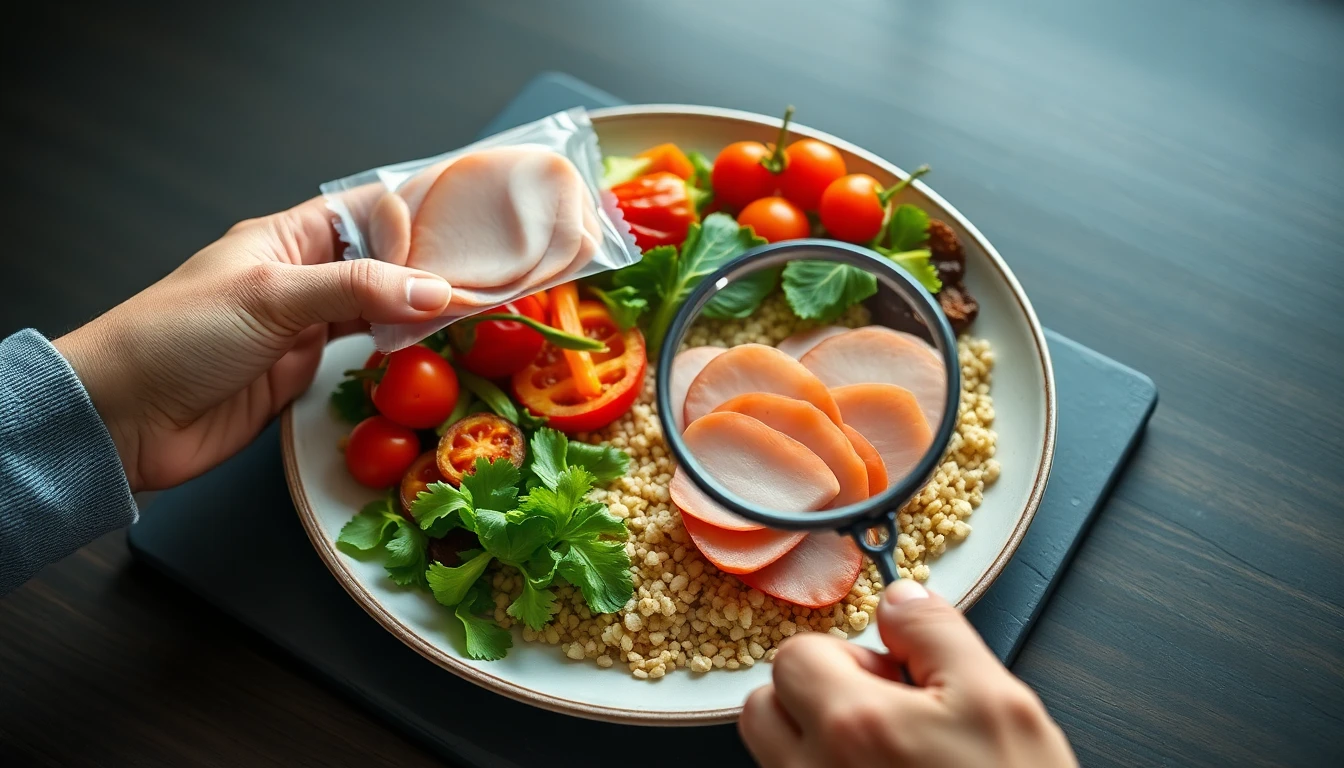
Read the ingredients list, not the nutrition table, and scan for the words phosphate, diphosphate, triphosphate and polyphosphate as well as the E numbers above. The nutrition table does not show added phosphate, because UK labels are not required to list phosphorus.
Ingredients appear in descending order by weight, but additives often sit near the end in small amounts. A short mention still counts, because the absorbed fraction is so high. Look in brackets after category names such as acidity regulator, emulsifier, emulsifying salts, stabiliser, raising agent and humectant.
A few habits make this quick. Check fresh meat labels, since some packs say "water, salt, stabiliser (E451)" in the small print. Compare two similar products and choose the one without a phosphate additive. If you are unsure, photograph the ingredients and ask your renal dietitian, who knows your blood results and can tell you how strict to be.
- Step 1 — find the ingredients list — ignore the front-of-pack claims and the nutrition table
- Step 2 — scan for E338-E343, E450-E452, E541 — these are phosphate additives
- Step 3 — scan for the words phosphate, diphosphate, triphosphate, polyphosphate — some packs print names rather than numbers
- Step 4 — check category labels in brackets — acidity regulator, emulsifying salt, raising agent, stabiliser
- Step 5 — compare brands — pick the version with no phosphate additive where you can
Should I cut phosphorus and potassium from whole foods in early CKD?
No: in early chronic kidney disease, do not cut potassium or whole-food phosphorus unless your blood results and your renal team say so. The KDOQI 2020 nutrition guideline moved away from blanket restriction, because wholegrains, pulses, fruit, vegetables and nuts protect heart health and are not the main phosphate problem.
KDOQI does support focusing on the source of phosphorus, and being mindful of additive phosphate in particular. That makes additive-reading the higher-value habit for most people, ahead of dropping nourishing whole foods. If your phosphate or potassium blood levels are raised, your dietitian will set personal limits, and our phosphorus foods and kidney disease limits guide explains how those targets are usually approached.
Stage matters too. A person with stage 3 CKD has different priorities from someone on dialysis, and our stage 3 CKD diet guide covers the wider picture. If you take an ACE inhibitor, potassium needs separate thought, covered in ACE inhibitors and potassium foods.
- Whole-food phosphorus (beans, wholegrains, nuts, dairy) — usually keep in early CKD — lower absorption, and these foods support heart health
- Potassium-rich fruit and vegetables — usually keep in early CKD — restrict only if your blood potassium is raised
- Phosphate additives (E338-E343, E450-E452, E541) — limit or avoid — nearly fully absorbed, with no nutritional benefit
- Dark colas — avoid where you can — phosphoric acid with no nutrients
- Any personal limit — set by your renal dietitian — based on your blood results and stage
How does FreshPlate help with phosphate additives?
FreshPlate shows any phosphate additive found in a product's ingredients when you scan a barcode or label. It lists what it finds, including E numbers, so you do not have to remember them.
FreshPlate never calls a pack safe. Your phosphate limit depends on your blood results, stage and treatment, and only your renal team can set it. The app flags what is in the ingredients and leaves the decision with you and your dietitian.
FreshPlate's free food–medication interaction checker lets you check how foods interact with your prescribed medicines in one place.
Frequently asked questions
How much of phosphate additives does the body absorb?
+
About 90 to 100% of phosphate from additives is absorbed. Phosphorus naturally present in whole foods is absorbed much less, around 40 to 60% from animal foods and lower from plant foods.
What E numbers should I avoid with kidney disease?
+
The phosphate additives are E338, E339, E340, E341, E342, E343, E450, E451, E452 and E541. Ask your renal dietitian how strictly to avoid them, as this depends on your blood phosphate level.
Is cola bad for kidney disease?
+
Colas contain phosphoric acid (E338), a phosphate additive that is almost fully absorbed. Many renal dietitians advise avoiding them, so check with yours.
Does the nutrition label show added phosphate?
+
No. UK nutrition tables do not list phosphorus, so read the ingredients list for phosphate words and E numbers instead.
Do I need to avoid beans and wholegrains because of phosphorus?
+
Not usually in early CKD. The KDOQI 2020 guideline does not support blanket cuts to whole-food phosphorus or potassium without a clinical reason, so follow the limits your renal team gives you.
Sources
- Ikizler TA et al., KDOQI Clinical Practice Guideline for Nutrition in CKD: 2020 Update (Am J Kidney Dis) — supports dietary phosphate management recommendations in CKD, including limiting phosphorus-based food additives
- NHS — Chronic kidney disease: living with
- Kidney Care UK — Phosphate and your diet
- Food Standards Agency — Food additives
Did this answer your question?
Reece reads every reply. Questions we have not covered become new guides.
Make kidney disease one less thing to worry about.
Get our free kidney disease guide by email — the best food sources, what helps and hinders absorption, and a week of meal ideas. One genuinely useful email a week — no spam, unsubscribe anytime.
Free forever. You'll also be first in line for the FreshPlate app — with a free trial at launch.