Carbimazole and Asparagus: Is Jarred Asparagus OK?
Asparagus is not a concern on carbimazole. What matters in jarred and tinned vegetables is the brine and any iodised salt. Here is how to check a jar.

By Reece Douglas · Founder, FreshPlate
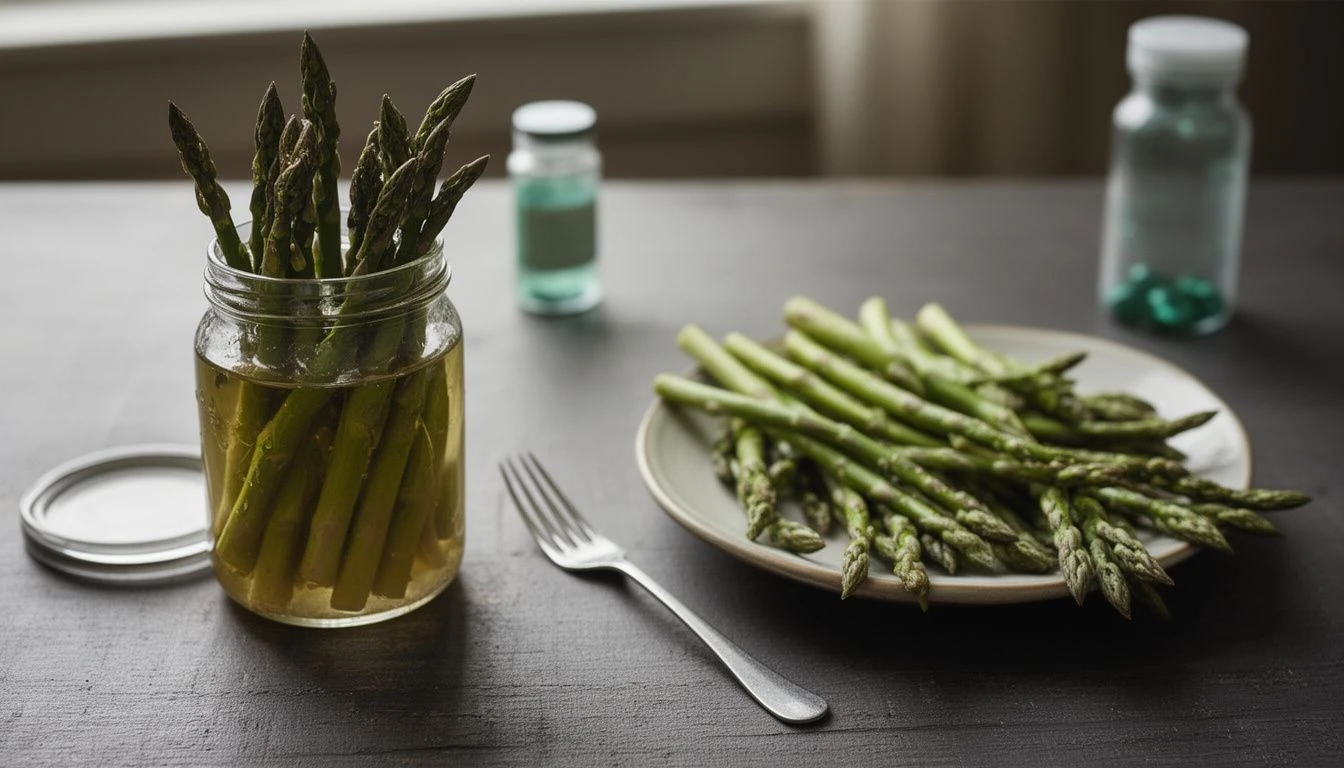
No, asparagus is not a food to avoid on carbimazole, and a jar of it is not automatically a problem. Asparagus is not a recognised high-iodine food, and nothing in the carbimazole guidance singles it out.
The question with any jar or tin is what it was packed in. Brine can be made with iodised salt, and iodine matters if you have an overactive thyroid. This post shows what to check and when to ask your prescriber.
Can you eat asparagus while taking carbimazole?
Yes, you can eat asparagus while taking carbimazole. It is not known for being high in iodine, and the NHS guidance on carbimazole does not list it as something to limit.
Carbimazole stops your thyroid making too much thyroid hormone. Your thyroid needs iodine to make that hormone, which is why the NHS says eating foods high in iodine can make your symptoms worse. The NHS says a doctor may suggest avoiding processed foods, cheese, eggs and salt with added iodine. Plain vegetables are not on that list.
Timing is not a concern either. The NHS says you can take carbimazole with or without food, so there is no need to space your tablet away from a meal that includes asparagus. The carbimazole timing guide can help you build a routine around your doses.
- Fresh asparagus — fine — a plain vegetable with no added salt or iodine
- Frozen asparagus — fine — usually just vegetable, check there is no sauce or seasoning
- Jarred or tinned asparagus — check the label — the vegetable is fine, the brine may contain iodised salt
- Asparagus in sauces or dressings — take care — these can bring in cheese, eggs or iodised salt
What the experts say
“Your doctor may recommend avoiding processed foods, cheese, eggs and salt with added iodine (iodised salt).”
Why does jarred asparagus need a closer look than fresh?
Jarred asparagus needs a closer look because the preserving liquid can contain iodised salt, which fresh asparagus never does. The NHS says a doctor may recommend avoiding salt with added iodine as part of a low iodine diet, so the brine is where any real concern sits.
Many jarred and tinned vegetables are packed in water, salt and sometimes an acid such as citric acid or vinegar. Whether that salt is iodised depends on the manufacturer, and the label does not always say. In the UK, iodised salt is not the default for most food manufacturing, but you cannot assume either way from the front of the jar.
How tinned and jarred vegetables differ
Tins usually hold vegetables in water or brine. Jars often use brine, vinegar-based pickling liquid or oil, and sometimes include herbs, garlic or other flavourings.
Brine is the part to think about. Draining and rinsing under cold water removes much of the surface salt and liquid, though it does not tell you what the salt was. If the label lists "iodised salt" or "salt (potassium iodate)", treat it as iodised salt.
- Tinned in water, no salt added — fine — nothing to worry about
- Tinned or jarred in brine — check the label — look for the word iodised or potassium iodate
- Pickled in vinegar — check the label — vinegar is not an iodine concern, but the salt and any added flavourings still count
- Jarred in oil with herbs — usually fine — check for cheese, egg-based or creamy ingredients
What to look for on the label
Read the ingredients list, not the front of the pack. Words that point to added iodine include iodised salt, potassium iodate and potassium iodide. Seaweed ingredients such as kelp, nori or kombu are a separate and much bigger iodine source, and they sometimes turn up in flavoured or marinated vegetable products.
If the label just says "salt", you cannot tell. Rinse the vegetables well, keep the portion modest, and ask the manufacturer or your pharmacist if you are on a strict low iodine plan.
Which iodine sources actually matter in hyperthyroidism?
The iodine sources that matter most are seaweed and kelp, iodine supplements, iodised salt, and in some people dairy, eggs and fish. Individual vegetables like asparagus are a minor part of the picture.
The NHS says the thyroid gland needs iodine to make thyroid hormones, and eating foods high in iodine can make your symptoms worse. It also says your doctor may recommend avoiding processed foods, cheese, eggs and iodised salt. How strict you need to be is your prescriber's decision, and it varies with your condition and blood results.
If your plan is built around Graves' disease, the Graves' disease diet guide covers the full list of foods in more detail.
- Kelp and seaweed supplements — avoid — very concentrated iodine, and the NHS lists iodine and kelp as a take-care item
- Iodised salt — limit or avoid if advised — your doctor may recommend avoiding salt with added iodine
- Processed foods — take care — a doctor may suggest avoiding them as part of a low iodine diet
- Cheese — take care — a doctor may suggest avoiding it as part of a low iodine diet
- Eggs — take care — a doctor may suggest avoiding them as part of a low iodine diet
- Plain vegetables like asparagus — fine — not a recognised high-iodine food
Is a low iodine diet always needed?
No. The NHS wording is that your doctor may recommend avoiding these foods, so it depends on you. Some people on carbimazole are told to cut iodine back, others have no dietary restriction at all.
Do not start a strict low iodine diet on your own. Too little iodine is a problem over the long term, and your prescriber reads your thyroid blood tests alongside your medication dose.
Does anything else in your shopping basket need a second look?
Yes, a few things do, though none are about asparagus. Some are about iodine and some are about how carbimazole makes you feel.
If carbimazole makes you feel or be sick, the NHS suggests sticking to simple meals and avoiding rich or spicy food. Plain asparagus on toast suits that advice. If it makes you dizzy, the NHS says it is best to avoid alcohol, coffee and other caffeinated drinks, as these can make dizziness worse.
Supplements are the other area to watch. The NHS says some herbal remedies and supplements, including black cohosh, can affect the way carbimazole works, and biotin supplements can affect the accuracy of thyroid function tests. Do not take biotin without talking to your doctor. A kelp or seaweed capsule is a far bigger iodine concern than any jar of vegetables.
- Kelp or seaweed supplements — avoid — concentrated iodine that can make symptoms worse
- Black cohosh — take care — can affect how carbimazole works
- Biotin supplements — take care — can affect thyroid function tests, talk to your doctor first
- Alcohol — take care if dizzy — can make dizziness worse
- Coffee and caffeinated drinks — take care if dizzy — can make dizziness worse
- Rich or spicy food — take care if feeling sick — simple meals are better
- Water — fine — drink plenty, especially with headaches or if you are being sick
How to check a jar of asparagus in practice
A label check takes about 20 seconds and covers most of the risk. Turn the jar round, read the ingredients, and decide whether to eat it, rinse it or leave it.
Rinse the spears under cold running water for a few seconds if the brine is salted. If the label mentions iodised salt, seaweed or an unclear flavouring, and you have been told to follow a low iodine diet, choose frozen or fresh asparagus for that meal. Roasting or steaming fresh asparagus with a little olive oil and black pepper takes about 10 minutes and removes the question entirely.
If you are unsure whether your plan is strict or relaxed, ask your prescriber or pharmacist. FreshPlate's free food–medication interaction checker lets you look up a food against carbimazole in seconds.
- Step 1 — read the ingredients — look for iodised salt, potassium iodate or seaweed
- Step 2 — rinse the spears — a few seconds under cold water removes surface brine
- Step 3 — keep it simple — plain asparagus with oil, lemon and pepper
- Step 4 — ask if unsure — your prescriber or pharmacist knows how strict your plan should be
How FreshPlate handles this for you
FreshPlate builds recipes around your medication and your prescriber's advice, so you do not have to read every label from scratch. If you tell the app you take carbimazole, it flags iodine-carrying ingredients such as iodised salt, seaweed and kelp, and takes care with cheese, eggs and processed foods where your plan asks for it.
Recipes use simple, plain ingredients, which suits both a low iodine plan and days when carbimazole leaves you queasy. You can change any recipe to match what your doctor has told you, because your own care team's advice always comes first.
Frequently asked questions
Can I eat jarred asparagus on carbimazole?
+
Usually yes. Asparagus is not a recognised high-iodine food, so check the brine. If the label lists iodised salt and you have been told to follow a low iodine diet, rinse the spears or choose fresh or frozen.
Is tinned veg bad for hyperthyroidism?
+
Not by itself. The salt in the liquid may be iodised, and the NHS says your doctor may recommend avoiding salt with added iodine. Check the label and ask your prescriber how strict you need to be.
What foods should you avoid while taking carbimazole?
+
The NHS says your doctor may recommend avoiding processed foods, cheese, eggs and iodised salt as part of a low iodine diet. Kelp and seaweed supplements are a much bigger iodine source and are best avoided unless your doctor says otherwise.
Can I take carbimazole with food?
+
Yes. The NHS says you can take carbimazole with or without food, so there is no need to time your tablet around a meal.
Does rinsing jarred vegetables remove iodine?
+
Rinsing removes surface brine and some salt, but it does not tell you what the salt was. It is a sensible step, not a guarantee, so check the label as well.
Sources
Did this answer your question?
Reece reads every reply. Questions we have not covered become new guides.
Eating around carbimazole shouldn’t be guesswork.
Get our free carbimazole food guide by email — the foods to watch, safe swaps, and meal ideas that work with your medication. One genuinely useful email a week — no spam, unsubscribe anytime.
Free forever. You'll also be first in line for the FreshPlate app — with a free trial at launch.